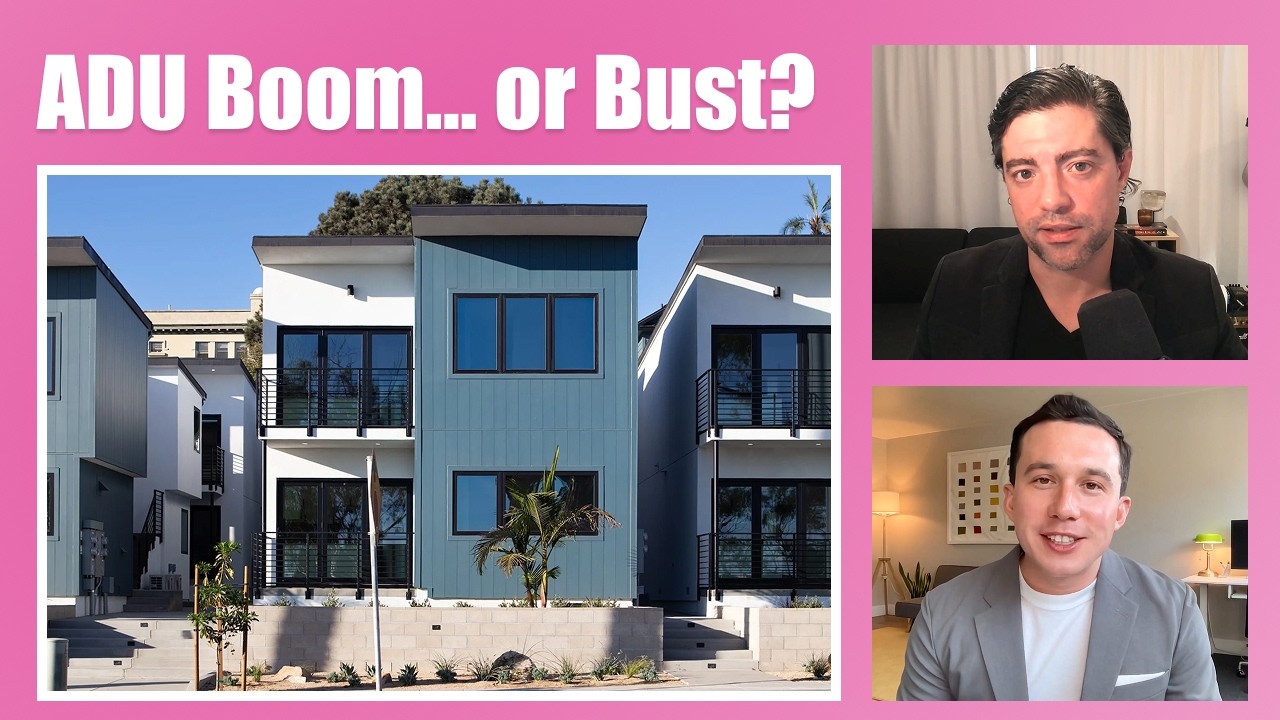
Building an ADU in San Diego After Your Zone Lost the Bonus Program

Losing access to San Diego's local ADU bonus program, as some lots outside the Coastal Overlay Zone did in August 2025, doesn't remove the state ADU options. I'd still investigate a detached home for family, subject to the lot's rules, and check the rental math before treating an ADU as an income property.
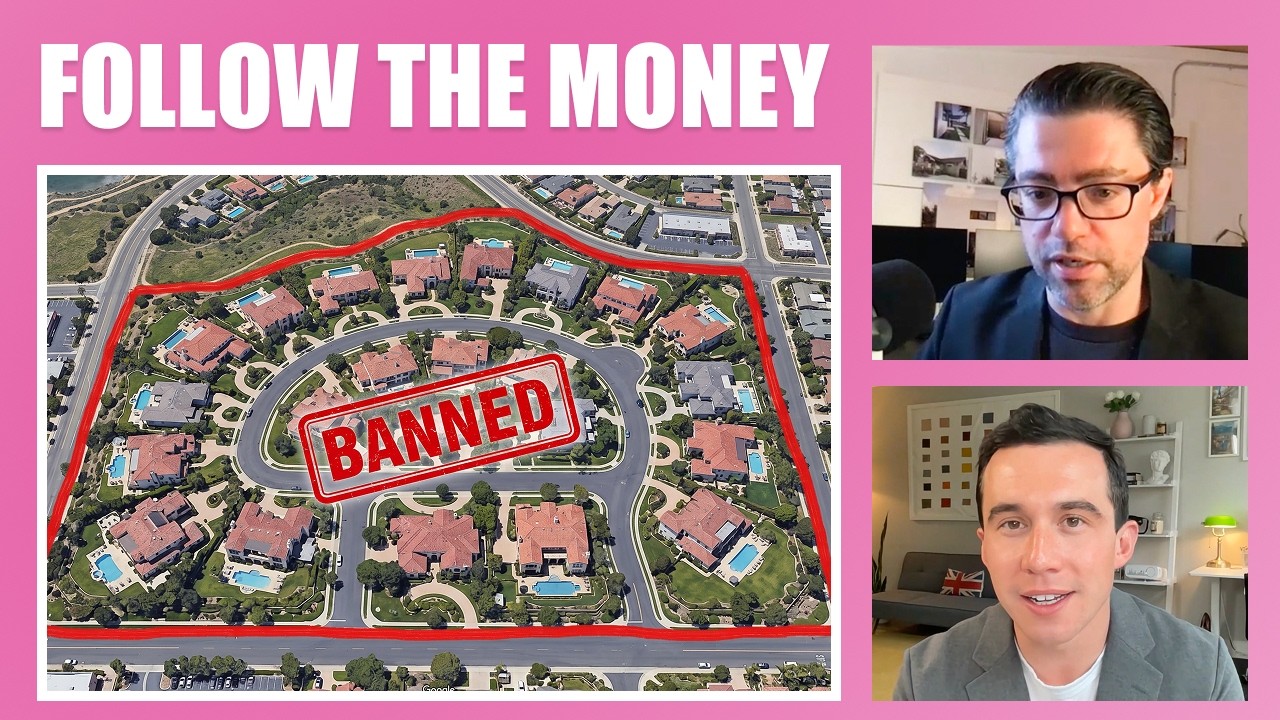
Watch on YouTube

Key Takeaways

  • San Diego's March 2026 ADU bonus framework paired one affordable ADU with one market-rate ADU, within the lot's development limits and, outside the Coastal Overlay Zone, a cap of four to six ADUs and junior ADUs on single-family lots.
  • Losing San Diego's local ADU bonus program, as some lots outside the Coastal Overlay Zone did in August 2025, still leaves state ADU options to investigate.
  • I live in an 800 sq ft home. I think of an ADU as another home, even when neighbors object to increased density.
  • For the San Diego rental scenarios I'm weighing in 2026, high construction costs can make it hard for ADU rents to cover costs.

Regulations Cited

  • SDMC 141.0302(d)(1), (d)(4), Table 141-03A (9-2026 edition)
  • SDMC 141.0302(b)(7)-(9), ADU size, FAR, stories, setbacks (9-2026)
  • Ordinance O-21989, Recital J and Section 10 (adopted July 22, 2025)
  • DSD Information Bulletin 400 (January 2026)

Checked against these sources as of November 2026.

Full Transcript

00:00BaileySo the city of San Diego just quietly eliminated the A DU Home Density Bonus Program from a handful of single family zones throughout the city, and most property owners in these neighborhoods have no idea.

They just lost access. So, Sean, for people who aren't familiar, what is the A DU Home Density Bonus Program and why were so many San Diego property owners excited about it?

00:28Sean CanningWell, thanks for the introduction, Bailey. So the A DU Home Density Bonus Program also referred to as the a DU Bonus Program. Um, at least previously it was referred to that it's a. Density bonus program where after you build your buy right ADUs that the state affords you, you can then continue to build ADUs.

The next one would be affordable. And then after that, you get one that's market rate, and then you can build an affordable one and then a market rate one. So this is a pretty powerful density bonus, which could allow you to build more than two ADUs on your lot. And in some cases, you know as many as. 30 or 40, depending on the size of your lot.

Now, a couple important things to understand, a couple important constraints here. You cannot break through the maximum floor area ratio of the base zone. So if you're doing this in a single family zone, you're gonna be limited by the. Uh, floor area ratio, which is lower in single family zones. You also still have the same setbacks as ADUs.

So in no ca in no case can you go closer to your property lines than you could if you were just building one a DU. Um, and in the single family zones, oftentimes ADUs are now limited to. Two stories. Um, so that's the scenario. That's kind of the background of the program. The program's been very controversial.

It only applies in the city of San Diego. So I, I do wanna state that, like you can't do this in Carlsbad, um, or Chula Vista. You can only do this in the city of San Diego. So the reason this has been so controversial is because you can use some single family zones that were basically zoned for a single family home.

Oftentimes you can build, uh, two ADUs on those lots depending on how you. Work, work the state a DU program. But using the city of San Diego's a DU bonus program, a lot of times you can now build four ADUs or five ADUs, and that's created a lot of controversy because obviously we need more housing, but people in these single family zones are not expecting this type of density.

Um, now this was a very interesting topic to research because zoning historically has been used to redline neighborhoods. It's been used to keep minorities in certain areas and allow for property value to increase in other neighborhoods by selectively limiting density. So let me do a quick screen share

here.

So the zones where these are banned. Are going to be these light yellow zones, and then we can cross reference this with Google Maps of San Diego and we can determine what neighborhoods these are. So let's get started figuring out which zones are essentially red lining developments here, redlining dense developments.

Okay, so first, let's take a look at this one. What neighborhood is that? Well, we can zoom in here. That's Encanto. So Encanto is not particularly a very wealthy area. It's kind of somewhere in the middle. But it's interesting that Encanto is one of these neighborhoods because Encanto just publicly had a big dispute over a footnote that was in the municipal code, which would've actually worked in their best interest and allowed them to subdivide lots.

Smaller than the existing lots. Now, this was pre presented to City Council as a racist, um, footnote, when in fact it was actually the opposite. It would've given these homeowners more opportunity. But now based on this new regulation, I'm showing you, this area right here in Encanto is banned from using the Home Density Bonus Program.

Okay, now let's zoom out a little bit. And scroll up and see if we can find some more neighborhoods. The next one is probably not gonna be a big surprise. Look at all this light yellow over here. And what neighborhood is that? Well, if we scroll,

04:22Baileyone. That is La Jolla.

04:24Sean CanningThat's La Jolla, right? So they're starting to become a pattern here.

Where some of these more wealthy neighborhoods are banning this program because they don't want density, and this is like 2026 redlining all over again. Why shouldn't there be an equitable approach to using this program and an equitable approach to providing affordable housing? Well, you can't do it in La Jolla.

Now let's, let's zoom out a little bit more and let's go over here, see what we can find. Okay, so over here, let's take a look at this. What neighborhoods are these? So we'll zoom in here and we'll just take one road here. Okay. Collette Way. So let's see what Collette Way is.

Okay, zooming in over here. And we can see that this neighborhood is considered Tiara Santa. So this is a wealthy neighborhood, and if we look here, look at how much light yellow is in this area. Basically the majority of Tiara Santa is banning this type of density using the A DU Home Density Bonus Program.

So let's continue to explore here and see what else we can find. I believe this will populate. It's a city website, so bear with it.

05:40Baileyjust to clarify, it's people in these areas can't take advantage of the Home Density bonus program, but could they still develop which I believe every lot usually about one, maybe two by default.

05:56Sean CanningYes, so these neighborhoods can still use the state a d regulations and the city and these communities cannot do anything about that because the state has made it very clear. But interestingly enough. These neighborhoods will never be able to reach the density that other neighborhoods have. So is that by accident or is it by design?

And I guess that's what we're debating right now. Okay. Let's take a look at some of these other neighborhoods. So I'm gonna kind of zoom out here. Hopefully this loads.

Okay, so we looked at these ones already. Let's come over here.

Now we're gonna be north of La Jolla,

so all this yellow. You can do this, all this brown. You can use the A DU Home Density Bonus Program. This is interesting. There's a little pocket over here and a little pocket over here. So let's figure out what these neighborhoods are. So if I zoom in, the street names should populate and we'll use this one Aspendale drive

I.

Okay. So for some reason this pocket is barred from using this program. Let's take a look at the size of these homes. They seem like pretty large homes. I would expect this to be a pretty well-to-do neighborhood. And if we zoom out here, what is the name of this neighborhood? Mo Scripps Highlands, one of the more wealthy neighborhoods in San Diego.

So you can see the trends start to develop. Uh, when we were over here, we noticed that there was another pocket of zoning that prevents this. Let's see where that was. So over here, we can't do this in the RS one eight and here's the RS one nine. So just uh, east of Poron Road. So let's see if we can find where that is.

I'm gonna come over here. Poron Road, just east. So it's going to be this neighborhood over here, which is also part of Scripps Ranch Fair Fairbrook Estates. So you can start to see a trend develop Bailey. What do you think?

07:40BaileyYeah, I mean, you can tell most of these places are wealthy neighborhoods just based on the name of the neighborhood.

07:47Sean CanningLet's, uh, let's do one more just to see if the trend continues here. I'm gonna zoom out a little bit. I,

and we'll start to climb a little bit more north.

As the city website populates.

So again, we're looking for those pale yellow neighborhoods. Here's one HETO Court.

08:01BaileySo, maybe you don't even know this, but what is the, how does this actually end up happening in practice? Like is it just going to like the local community town hall type events to for this? How does it actually end up, you know, becoming into the municipal code?

08:16Sean CanningSo basically community groups would lobby or put pressure on city council, and then the code would be modified through a procedure with city council. And then they would determine, okay, we are going to take this specific zone and eliminate it from the program. So they're basically being lobbied by the communities.

And, um, some of these neighborhoods have big money behind them, and that's basically how they're able to do it. And this is part of, uh, Los Pen, mosquitoes area here. So it looks like another wealthy area. Basically all these neighborhoods up here are pretty, pretty well off. And see over here, this entire group, this entire yellow, you can do, you can use the A DU bonus program here.

So there's density permitted in these neighborhoods, but not in those light yellow neighborhoods. Let's keep going here. See if we could find one more just to drive the point home.

So you can see that the majority of San Diego does allow this, and it's very select neighborhoods that does not allow this. Okay, let's take a look at this one here. This is our Summit Trail.

I'm gonna come here and Pacific Highlands Ranch, very well off neighborhood, so I think that's enough. You can kind of get the idea of what's going on here and the pressure that's put on City Council to change this municipal code. Um.

So what do you think about this, Bailey?

09:41BaileyWell, I mean, I don't think it's necessarily good, but I do think it's predictable. I think honestly, based on all this, these neighborhoods would probably go as far as to even ban the regular A DU codes, the ability to build one or two on your lot if they could get away with it.

09:57Sean CanningYeah, um, that's probably true. I mean, a are very misunderstood. You have to. You have to think about it as an A DU is just a home. There's homes that are, I live in a home that's smaller than the maximum size of an A DU. So I live in a 800 square foot home. You could build an A DU at 1200 square feet and it's, for all intents and purposes, it's the exact same thing.

So a D are not something to be feared, but I think what people fear is more density in their neighborhoods and. I just wanna also reiterate the point. These zones that do not allow this a DU bonus program are very select zones within the constrains of the city of San Diego. I mean, you're talking about like less than 5% that are banning this program.

And then it was very interesting to actually, uh, cross-reference these zones with the neighborhoods. And then you start to. See what's going on here, which neighborhoods are banning density and which neighborhood, which neighborhoods have lobbied city council to prevent this type of development. Um, so the puzzle pieces kind of all fit here.

And, uh, I guess after doing all of the research here, ultimately, like you said, it's not a surprise, but, uh, that's the results of how zoning can affect density and how zoning can affect the city.

11:17BaileyTwo quick questions before we wrap up. Number one, what if someone already had a project in place or like in the planning stages, maybe it was in like permitting review, for example, that was going to take advantage of the A DU home bonus program. Like how would that happen for projects in flux?

11:36Sean CanningOkay, so the deadline is you basically have to get your. Project into permitting before the code changed and then your grandfathered into. The code that was in place at the time when you submitted the project, if they didn't use that as a deadline, like it would just be chaos. Um, because this code changes so often.

Um, I was using the March version of the code March, 2026, but this change actually occurred, uh, around Mid August, so it's definitely too late to get your project in in any of these neighborhoods, but you could have done it before August of 2025.

12:12BaileyGot it. Um, I guess just something for people to know in general, if, you know, they're planning a project to know when like the deadlines are in case they're looking to take advantage of, um, older regulations. And then the last question is, so in your expertise, how would you advise people who perhaps. Want to perhaps live in these neighborhoods or want to develop in them, say they were planning to take advantage of this program, they can no longer do so.

Is there anything you would suggest as a backup plan?

12:40Sean CanningWell, I mean, if you live in this neighborhood. And you were considering developing ADUs, you still do have a lot of options. You cannot build, you know, four ADUs in your lot in these neighborhoods. It's just not going to be permitted. But I would imagine if you're a homeowner in this neighborhood and you want to build an A DU for rental purposes, you could still build a detached a DU up to 1200 square feet.

You could convert your garage, which is generally a smart move, financially forward move. Um. I also work on projects where homeowners want to build a home for their children or want to build a home for their elderly parents. And the A DU fits that mold perfectly. So that's a kind of understated use of the A DU Land is so expensive right now.

Properties are so expensive right now in San Diego, but if you already own the land and. You can build an A DU for far less expensive than you can buy a new property. So you can actually use this A DU and now you can take care of your elderly parents right on your property. Um, or when your kids graduate college and you find out that because we don't have enough housing here, they actually can't afford to.

Buy anything. You could build them this a DU in the backyard. They could live there with their family. Now their kids will be close to you. To you. This is a great scenario and it's much better than them moving to Riverside or, um, you know, moving to another state.

14:06BaileyDefinitely. Yeah. And then on that note, then, would it be possible for people to build a duplex or a triplex even like, you know, build up taller and then as a, as a sneaky way to get more rental units potentially on like a small footprint?

14:23Sean CanningWell, sometimes the, it's hard to build an A DU in 2026 and make it cash flow for rental purposes, like construction cost is high materials, high fees are higher. Now for these ADUs. Um, and land is high. So it's just very difficult to build ADUs to, to cashflow for rent. Uh, in most scenarios, you're better off taking that money and investing, investing it in the stock market.

However, in some of these more well-to-do neighborhoods. Um, the amount that somebody would pay to rent them is higher, so potentially it could pencil out. In general, you're not gonna make the math work if you're doing a second floor, a DU and also you're gonna be limited in these single family zones now to two stories.

Um, so I think the neighborhoods we're discussing here. The strategy would be to build a family compound or build an a DU that could be used as a guest house, um, uh, multipurpose home office, home gym. That's what makes sense in these higher end neighborhoods. It doesn't necessarily make sense to build these to rent, uh, although in some scenarios it, it could, uh, especially like a garage conversion.

You could also take one of these large homes and split it into a duplex with half of it being an A DU. Half of it being the dwelling unit without adding any square footage. And I would suspect that would probably be a smart financial move if, um, if you're willing to live in a duplex. But I think a lot of the people who buy in these neighborhoods, they're just not looking to live in a duplex.

So the a DU really makes sense for, I think a detached a DU makes a lot more sense. Uh, you can provide a lot of privacy and respect to the occupants of a detached a DU, and. Right now we're doing ADUs as part of like a family compound, and I think of these properties that that really makes the most sense.

16:17BaileyThere's always a way to get creative with it, I think is fair to

16:19Sean CanningMm-hmm.

16:20BaileyUm, if people, I think that's a good place to leave it. If people want to get in touch with you about an A DU project, what's the best way for them to find you online?

16:28Sean CanningWell, you can go to 10 70 architecture.com. You could visit our Instagram page or you can send me an email, which is Sean, SEAN, at 1 0 7 0 architecture.com. And also, I'm curious if people wanna drop comments and. Let me know if they think this is an intentional modern day redlining process or if they think this is, uh, just chance.

I'm curious to hear what people think.

​

Can I Still Build an ADU in San Diego If My Zone Lost the Bonus Program?

Yes. An ADU, an accessory dwelling unit, is still worth investigating under the state options when a San Diego lot loses access to the city’s ADU Home Density Bonus Program. As of March 2026, I’d consider a detached ADU up to 1,200 sq ft, subject to the lot’s requirements.

I think of an ADU as just a home. I live in an 800 sq ft home, so that potential ADU could be larger than the home I live in.

For a homeowner who wanted four or five ADUs, losing the local bonus changes the plan. If your goal is one separate home for a parent or grown child, I’d start by checking that possibility on your property.

How Did San Diego’s ADU Bonus Program Add More Homes to a Lot?

San Diego’s ADU bonus program pairs an affordable ADU, a home with restricted rent, with a market-rate ADU, rented without that affordability restriction. After the state ADU allowance, those pairings can add homes, subject to the lot’s limits on building size and placement.

The pattern is an affordable home, then a market-rate home, then another affordable home and another market-rate home. Outside the Sustainable Development Area, a set walking distance from a major transit stop, the program allows one pair. Outside the Coastal Overlay Zone, the total of ADUs and junior ADUs (units of up to 500 sq ft inside the main house) on single-family lots is capped at four to six, depending on lot size. On some eligible lots, that can mean considering four or five ADUs.

I can see why that opportunity excited homeowners with property zoned for one primary house. The program offered a way to add more homes while including affordable housing.

It also created controversy. Neighbors who expected a single house on a lot weren’t expecting that kind of density, meaning the number of homes on the property.

Which San Diego Neighborhoods Lost ADU Bonus Access?

Outside San Diego’s Coastal Overlay Zone, the August 2025 changes took the ADU bonus program away from eight very low-density single-family zones. A lot in those zones stays eligible if it rates high or highest resource on the state’s opportunity map when its application is deemed complete and its land use plan designates it residential.

The zones are RS-1-1 through RS-1-4 and RS-1-8 through RS-1-11. On the March 2026 zoning map, they appeared in parts of Encanto, La Jolla, Tierrasanta and Scripps Ranch, plus pockets in Scripps Highlands and Pacific Highlands Ranch. A neighborhood name alone doesn’t establish what an individual property can build.

The city’s own map layers show the exceptions doing most of the work. Most of the land in those zones in La Jolla, Scripps Ranch, Tierrasanta and Pacific Highlands Ranch rates high or highest resource, so lots there designated residential keep the program. Much of La Jolla’s also sits in the Coastal Overlay Zone, where the changes still awaited Coastal Commission certification in November 2026. Most of Encanto’s rates low resource, so lots there lose the program.

When I lined up that map with neighborhood names, before working through those exceptions, the puzzle pieces seemed to fit. Around Scripps Ranch, Fairbrook Estates stood out to me. Encanto was also part of the picture, so I wouldn’t reduce the concern to a list of expensive neighborhood names.

For your property, I’d compare the specific zone, the lot’s resource rating and its coastal status with the bonus program’s rules before drawing a layout for several ADUs. The map needs to lead back to the actual lot.

Why Do Some San Diego Neighborhoods Get More ADUs Than Others?

San Diego’s ADU bonus eligibility determines where additional homes can be considered. I want an equitable approach to the 2026 program and to affordable housing. A four- or five-ADU proposal can be controversial on a lot zoned for one house, but that doesn’t explain why the opportunity should differ between neighborhoods.

Looking at the zone map in March 2026, I questioned whether the uneven access to additional housing was intentional. That’s my view of the zone map.

My questions for the city: why was a particular zone removed, and did community pressure shape that decision? I’d like to know why one owner can consider additional homes while another loses that option.

An ADU is a home. I understand that people worry about more homes in their neighborhoods, but I’d still like a consistent approach to housing across San Diego.

Can My San Diego ADU Project Keep the Rules From When I Submitted It?

Under San Diego’s 2025 ordinance, a project kept the earlier bonus rules only if its permit application was deemed complete before the changes took effect, August 22, 2025, outside the Coastal Overlay Zone. A homeowner who had planned around the old rules but hadn’t reached that point lost them. Applying every revision to a moving project would create chaos.

Coastal lots are different: the 2025 changes hadn’t taken effect there, and the city still listed Coastal Commission certification as pending in November 2026. I’d check which side of that line the lot sits on before assuming which rules apply.

I’d start with the application’s status and the date the city deemed it complete. A plan to use the bonus program doesn’t, by itself, tell me which rules the city will apply.

Will a San Diego ADU Pay for Itself as a Rental?

For a San Diego rental ADU in 2026, I’d run the numbers before taking rental income for granted. High construction and material costs can make it hard for rent to cover costs. Higher rents in some wealthier neighborhoods could help the math, but I wouldn’t assume the project pays for itself.

I start with what the home is supposed to do. An owner seeking rental income has a different goal from a family trying to keep an elderly parent nearby.

A garage conversion, turning an existing garage into a home, is another option I’d consider in that rental comparison. I think it could make financial sense, subject to the specific project.

In these neighborhoods, I lean toward a home the family can use. A rental could work in some cases, but I want the costs and expected rent to support that decision.

What Can I Build on My San Diego Lot for My Family?

For a San Diego family considering an ADU in 2026, I’d investigate a detached home for an elderly parent or a grown child. A separate home can provide privacy and respect for the people living there. We’re working on ADUs as part of family compounds, properties with homes for members of the same family.

I work with homeowners who want to house their children or elderly parents. Having a parent on the same property can make it possible to care for them nearby, and a home for a grown child can keep that child’s family close.

If your children have kids of their own, that could mean your grandchildren live close to you. I think that’s a good reason to consider an ADU, even if building a rental isn’t the right fit for the property.

Start with the zoning and bonus-program eligibility, whether there’s an existing garage worth considering and who the new home needs to serve. Those give us a place to start a design that fits your family, and if your lot sits in one of those eight zones and you’re picturing a home for family, the consultation is complimentary.

Questions You Might Still Have

Can I Use San Diego's ADU Bonus Program in Carlsbad or Chula Vista?

No. San Diego's ADU Home Density Bonus Program applies only within the city of San Diego. I wouldn't carry its extra-unit assumptions into a Carlsbad or Chula Vista project.

Does the ADU Bonus Program Let Me Build Closer to My Property Line?

No. Under San Diego's code, bonus ADUs keep the setbacks, the required gaps from property lines, that apply to other ADUs. Adding homes through the bonus program doesn't remove those placement limits.

Does San Diego's ADU Bonus Program Override Floor Area Ratio?

No. Outside the Coastal Overlay Zone, San Diego's bonus program is subject to the base zone's floor area ratio, the building-area allowance relative to lot area under the property's underlying zoning. I'd check that square footage allowance before drawing additional homes.

Could I Divide My Existing House Into Two Homes Without Adding Square Footage?

Possibly. One option I'd investigate in 2026 is dividing a large house into an ADU and the main home without adding square footage. That arrangement depends on the property's rules and whether you're willing to live in the divided building.

Is an Upstairs ADU a Good Rental Strategy?

For the 2026 rental scenarios I'm weighing, I generally don't expect a second-floor ADU to make the rental math work. Outside the Coastal Overlay Zone, detached ADUs on single-family lots also face a two-story limit, so I wouldn't assume building taller is an available workaround.


Episode
24
Published
Updated
Length
17 min

Got a project you'd like to discuss?

  • Talk through your vision for your project with an experienced architect
  • Receive honest guidance on feasibility, if the project is possible or if it makes sense
  • Understand general project costs and timelines so you can make an informed, responsible decision
  • Walk away with a clear picture of the process an architect will use to bring your project from where it is today to a reality
Instagram @1070architecture
Studio San Diego, California