00:00Sean Canningcities are headed towards a style of city planning that is called new urbanism Land cost is too high, interest rates are too high, and construction cost is too high. if your concern is infrastructure, then you're actually an advocate for higher density neighborhoods
you're not really guaranteed any privacy in your backyard
Of course, the government is using the money inefficiently
the density is an inevitability I know that's the truth that a lot of people Don't wanna hear, but I think that's the truth of it.
00:28BaileyOn our last episode, we broke down 35 new housing bills that California Governor Gavin Newsom just signed into law, and how they impact the city of San Diego.
Some of the biggest changes in the new housing package include allowing two detached ADUs on most residential lots, lowering the fees on larger ADUs, and streamlining housing near transit and smaller starter homes. Now, that video received over 500 comments, and a lot of you wrote in with real concerns, everything from neighborhood character changing, to whether the infrastructure of the city can handle it, parking, the headaches of being a landlord, and what this is actually going to cost both the city and the people who live in it.
So in today's episode, Sean is going to respond to the best of these comments, the real good faith critiques. So Sean, before we jump in, can you give everyone a little bit of context on where you're coming from before we dive into the housing discussion?
01:34Sean CanningYeah. So thanks for setting this up, Bailey. the last video was our most watched video, and it generated a lot of buzz, especially in the comment section, and it was a pretty spirited debate. So I thought this video as a follow-up would be super helpful to try to address some of the concerns and,try to explain the reasons why as an architect, from an architect's perspective,we share certain ideals with the direction that the state is going with some of these Senate bills and Assembly bills. I gotta give a little bit of a preface here because I know this gets heated. okay, so first thing, the last video that, that we published, which covered Assembly Bill 2074, 1117, 1116, 1014, 956, 1070, and 1621. So just to summarize, none of these bills allowed for any more density than what is already allowed for. So so-- I felt like some of the comments were like, "Oh my God, they're gonna build these apartment complexes," but that wasn't even what we were talking about in the video. So for this to be a constructive conversation, I think it's important for even the naysayers understand where the topic is and stay within topic, because otherwise it just spins off into this, political, debate. I think the bill that was the most hotly contested in the comments is AB 956, which is considered the double ADU bill, allows for two ADUs to be built on any residential zoned lot. Now, like I said in the last video, this doesn't allow for any more density than what you can currently do.
Because even on a single family lot right now throughout the entire state of California, could build one detached ADU and then I could convert my garage into a second ADU. if I wanted to, I could... If I didn't have a garage, I could just permit a garage and then convert that new garage into an ADU. So essentially, all these bills together, what they do is they cut down on bureaucratic bullshit. So if you're not a fan of bureaucratic bullshit, then you should support these bills because they're not really allowing you to do anything else here. They're cutting down on permit times, or they're supposed to cut down on permit times. They're eliminating, legislative s- paperwork. And, the goal here is to make it less expensive to do these projects. we're not really talking about like 20-unit apartment complexes. We're talking about one or two ADUs in your backyard or your neighbor's backyard for the most part.
So let's just keep the comments and the conversation like within those constraints.
Okay, a couple other things I wanna say as a preface here. Number one, like I understand people hate change, and change is difficult in any scenario, and you're going to see neighborhoods change. So I understand that like from this, a starting point, people are gonna be unhappy about this. also unders-- important to understand that a healthy city is a growing city. Because if a city is not growing, it's essentially a static city, and that is a city in decline. So if you think about it, what would you need to make a city completely static where you don't need any new housing and you wouldn't, be increasing any traffic? you'd have to have population s- like staying exactly the same. that means you're gonna create a limit for how many children each family could have. You're also gonna have to create a limit for how many cars are on the road, because if you have a family of two with two cars and they have two kids, when those kids become driving age, there's gonna be two more cars on the road. you'd have to like closely control all of these things. you'd also want all business, support to remain static, so businesses like wouldn't get more customers. So it's very important to understand that a healthy city is a dynamic city, a growing city, and that comes with infrastructure costs. But also a static city, which is a failing city, has similar infrastructure costs 'cause you still need to maintain the exis-existing infrastructure, and eventually a static city will go bankrupt. You can Google that, to fact-check me on that and then put your answer in the comments here. Okay, a couple other things. I am a fan of density, and I agree that density needs to occur in the right spot. So I think most of the debate we're having here is where should density be? if you're talking about in my opinion, the most obvious location density should be is near public transportation. if you're gonna have any density, that's where it should be. How could you argue about this? we've already paid the cost for, public transportation, so whether that's a train, a trolley, even at the lower end, like a bus line or two intersecting bus lines, which is considered a major transit stop in California, this is where we need to add the density. So I think most people would agree with that. Let me know if you don't agree with that, because if you don't agree with that at all, I don't know where you would put the density. I would say as a second tier, the spot where it's the most obvious to put density is in the city centers. I work in City of San Diego, and most of my comments in this video and the previous one are about specifically City of San Diego. Now, when you have a city, you're gonna have a dense core, and then you're going to have a suburb around that, and then you're gonna have rural areas around that. So really the debate is where is the threshold between urban and suburban? because you're gonna get some people here that are gonna say South Park i- should not have more density. But I think where I would, stand here is, the areas way further out of the city limits are the areas where we should have less density. So I think really it's just a debate about where the threshold lies.
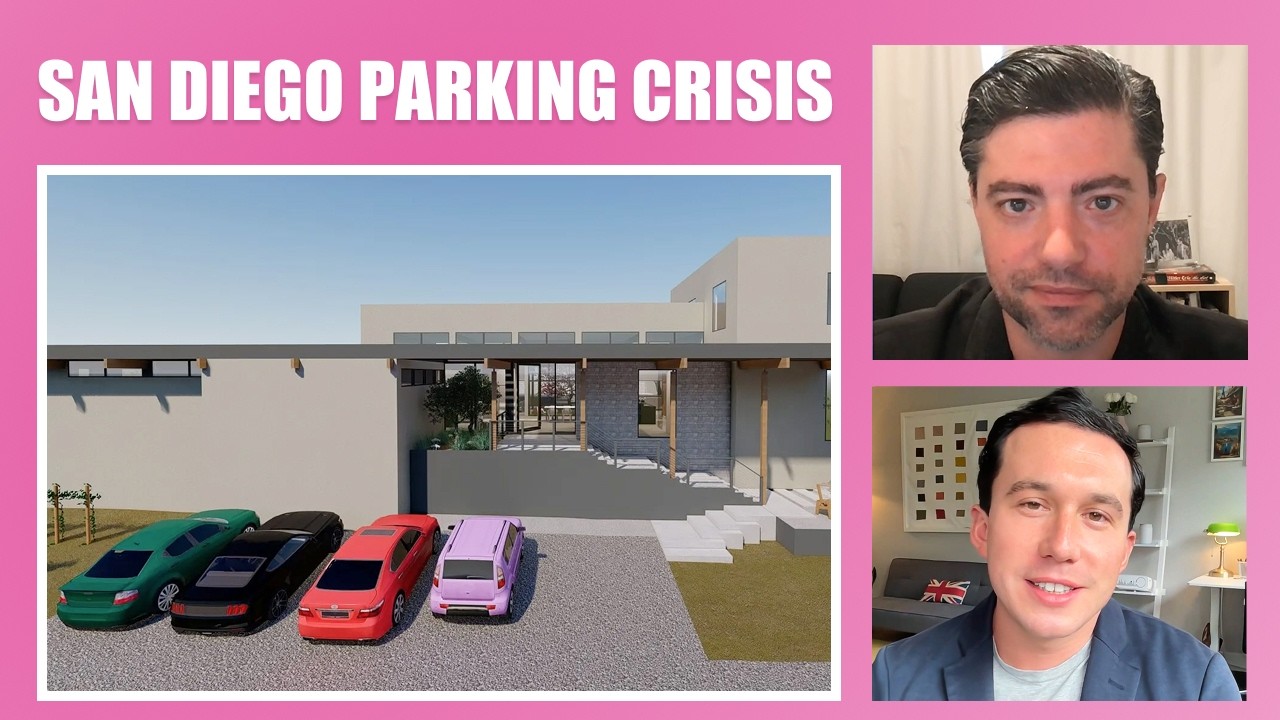
in this video, we're gonna share some harsh truths, particularly about parking, which is one of the most contested things.
So there's gonna be some harsh truths here, and I know some of the comments lean politically. I'm really neither a Democrat or a Republican. I like to take each situation and evaluate it based on what my interests are, which are improving the built environment in the city I work in, and that's kind of the goal of any architect that's doing their job. of course, my expertise is in architecture, and I guess you could say it also permitting because we end up doing a lot of permitting. So architecture and permitting. Adjacent to that is city planning, and I have taken college courses in city planning, and I've also studied a lot of city planning, and I also read a lot of books on city planning. And my Instagram feed is, at this point, more city planning than it is, architecture. So I'm very interested in this. I've been doing a lot of research on this over the past fifteen to twenty years. The thing where my expertise, like where my expertise stops is politics. So I just really am not into the political debate of this. so I'm just trying to speak within my knowledge base. there's also a lot of conspiratorial, c-comments, which is interesting. Bailey, you know me, I am a conspiracy theorist, but based on my understanding of conspiracy theories, I am not seeing this as a huge collusion and conspiracy theory.
There are just too many people involved to make this a conspiracy theory, and if you know anything about conspiracy theories, it's all about reducing the amount of people who have inside information. So I'm not seeing this as a, conspiracy. I also wanna delaminate this conversation from the homeless crisis because I think the housing crisis, which is what we're-- which what these bills are supposed to help, much closer to the affordability crisis.
I think it's actually part of the affordability crisis, but I don't think it's part of the homeless crisis or the overlap is very small because I don't think you really help somebody a mental health issue or a drug issue by building them an affordable home. So I would just like to delaminate this conversation we're gonna have today from the homeless crisis. And, Last thing, if you're watching the video, you should know a little bit about me. So I am one of the most outspoken architects, maybe the most outspoken architect regulations that the city of San Diego has created as part of their permit process. So I'm an advocate for people to be able to build, especially homeowners. homeowners to be able to build easier than developers, which I think makes a lot of this work a lot better. but I also want less regulation because I believe we over-regulate. I
The answer to a lot of these questions is what is happening in the macro scale of the market forces. So right now, in October 2026, have high property costs in the city of San Diego. The average home, I believe, is over $900,000 right now. So we have h-high property value. high construction costs. The average build is going to be priced around $400 a square foot or more. That's very expensive in comparison to where we were, in 2020. so we got high construction cost, we have high property cost, and we have high interest rates. And these three things are going to work dynamically to affect whether y- a developer can buy a lot something or whether a homeowner can build something on their own lot, and we're probably gonna get into that quite a lot more. Now, those are things that the state can't help. So the state is up, upzoning every property, every residential property in California, and they started doing this in 2020. hit right around 2021, and since then, these different market forces have created, a bunch of challenges which we're still struggling with. Okay, so that's a good preface. Let's just jump into this, Bailey.
11:26BaileyYeah. N-nice job setting that up. So we went through all the comments, and what we found is that they mostly fall into five buckets, those being neighborhood character, infrastructure, being a landlord, the costs, and whether these laws are actually even solving the right problem to begin with. So let's start with the neighborhood character category, and we'll go starting with the most liked comment on the video.
this person says, "I can see developers buying up single family homes in a neighborhood and building apartments." So like you were saying, that's probably the most obvious critique, but what is your response to that perspective?
12:05Sean CanningOkay. I think this comment is important because this is the most valid concern in my opinion We have to for homeowners to develop ADUs themselves, because if the homeowner can't do this, you're going to get developers buying lots, building these ADUs, and then trying to rent out or, possibly flip. in my opinion, this is my biggest concern, and what we need to do is further incentivize smaller scale developments allow for a shortcut for homeowners, because a homeowner shouldn't necessarily have to compete with the larger developers. Now, specifically in the city of San Diego, what we're seeing is homeowner projects being treated exactly the same as mid-scale developer projects, and I believe that is a major issue. if a homeowner is gonna build one ADU in their backyard, shouldn't be subject to all of the reports that a 20-unit development is going to be subject to. But currently, there's, essentially no difference here. The, the way the program works the best is, what would result in gradual, gentle density.
I believe gentle density is a term I've heard thrown around. And this is where people build one or two ADUs in their backyard, but you don't necessarily get the 20-unit apartment complex popping up,in the middle of a single family home. I agree with this commenter. We need to watch out for this, and we need to find a way to incentivize the projects right now.
Now, let me just bring this back to the, the market dynamics here. Expensive land, high interest rates, expensive construction. Right now, in 2026 in the city of San Diego, projects are out of reach for homeowners. There's two reasons why a homeowner would do a project like this. Number one, they're going to create an investment property in their backyard that they can rent out and make money. Or number two, there's an intrinsic reason for them to do this, like building an ADU for their children or building an ADU for their aging parents, because we know it's less expensive to build an ADU on a lot you already own, especially if you purchased that lot before 2020, than it is to buy a new property that's going to be on average $900,000. So for a homeowner to do this project, need one of those two things to happen. There needs to be an intrinsic value it needs to be profitable. It's no longer profitable for the homeowner. So the only reason somebody would build this as a homeowner is an intrinsic value, and that's going to result in a reduction of homeowner-built ADUs. you can apply the same logic to a developer. A developer has no intrinsic value. Most developers have no intrinsic value. So what they want to do is build something that's going to be profitable for them. it's not profitable, the developer will not build it. there's no developer that's going to plan on losing their shirt on one of these projects. So by changing the mechanisms, of how these things get built and permitted and designed, if we can change these levers so that it favors the homeowner, you're gonna get gentle density rather than,unreasonably large or projects in single-family neighborhoods. So that would be my answer to this comment
15:29BaileyGot it. Okay.
Let's move on to the next one here. So this person writes, " So we purchase a property zoned R1 expecting the home and surrounding area to remain single family residencies to stay that way, but it now means nothing. Now the neighborhood we thought we were buying into has completely changed from low density and preserving property values to mean nothing.
How is this even legal?" So I think this actually gets at a pretty common anxiety amongst people who are already living in a neighborhood. What would your response be to that?
16:03Sean CanningOkay, so the first thing is where did you buy? Because if you bought in the city of San Diego, this is gonna... The, the density is an inevitability, and if you bought in the middle of nowhere, you probably can expect that neighborhood to remain relatively unchanged. So it really depends on where this person purchased the property. But, one of the things that's been in the news lately a lot in California is, there's some of these homes that are built on a cliff right by the ocean. we're watching these news reports and, the ocean is eroding the cliff, and the home is on top of the cliff about to fall into the water. And when I watch those videos, the first thing that pops into my mind is, why did you buy a home on a cliff?" And I think, a lot of the people who were commenting in the video can relate to that. I think that's the first thing you go to when you see these cliff homes. But the same logic can be applied to somebody who bought a home in the city. If you buy a home in the city, would you expect there not to be an increase in density? That's the ocean about to take over the coast. it's just an inevitability. the same person who's buying a home in the city complaining that the neighborhood that they purchased into is getting more dense. I feel like this is the guy who goes to the grocery store, comes home with all his groceries, and then complains that he doesn't have, have enough pantry space. It's like, dude, you knew what you bought, or you should have known what you bought. that's my initial stance here. I know that's the truth that a lot of people Don't wanna hear, but I think that's the truth of it.
If you bought in the city, you need to in-expect that property to be treated like a city property. There's not a lot of single-family homes in New York City, and there's a reason for that. But if you go back in the past, there was. just in general, cities are headed towards a style of city planning that is called new urbanism, and this has been, a decade-long in city planning.
And new urbanism is the exact opposite of single-family zoning, multi-family zoning, commercial zoning. Within the construct of new urban city planning, you're going to be mixing some of these, of these zones. So ideally, you're gonna have a small commercial in a residential neighborhood. You could look at this as like the corner store or the bodega if you're from the East Coast like I am. You wanna be able to walk to the corner store to pick up a six-pack of beer. You don't wanna have to jump in your car, three miles, wait in whatever type of traffic you have between you and the market, and then drive back.
that's just not an ideal. You're increasing traffic, you're increasing pollution. you need a road to do that. You can't walk. So the ideal is getting uses next to each other, and part of that is increasing density and having different demographics live in these areas. So if you have a large single-family home, you could have a family in that home. If you have a s-smaller duplex, you could have a college, a, a c- a pair of college roommates, and you can have a single mother live in that. increasing density in the right areas and mixing the use is really just considered the ideal for city planning today. But the last thing I wanna mention about this topic is, the person complaining that they're experiencing density occurring around, around their single-family home, your property is worth more because there's more land, there's more usage m- potential for your property. so your property went up in value. So I, I-- We shouldn't leave that off the table. the person's complaining about density while their property is increasing in value.
19:45BaileyYeah, I mean, they could always sell and leave if they felt so strongly. Most people would be upset if they moved to a city, a centrally located neighborhood within a city, and did not experience, like, a dense urban lifestyle, So I think most people would actually have the opposite complaint.
Getting a bit more at that, so the next comment writes, " What a nightmare. Leave the city to buy a house in a rural area and suddenly you are forced into high density housing full of renters." Now, as a renter myself, I take offense to this, but it's okay. I don't think she was singling me out necessarily.
But do you wanna clarify that? I think we were pretty specific in the video that this, for the most part, did not really apply to rural areas.
20:25Sean CanningYeah,if you're renting, then you're confirming that you're not AI, Bailey. But we'll get to
20:29BaileyYeah, we'll get to that
20:31Sean Canningokay, so I feel really bad, like just I feel really bad for the developer that builds a multifamily development in a rural community, because that
guy just went bankrupt. There's a reason when you drive up California and you get to the part of California north of Los Angeles where it's all farmlands, there's a reason you can look out and see the horizon and you don't see mid-rise buildings there, because all of those mid-rise buildings would fail. Nobody would live in those. Ru- r- rural neighborhoods would be awesome to be able to develop in because they have giant lots,there'd be so much opportunity. But the market forces that we talked about at the beginning of this video would not allow a developer to build a, a mid-rise, i- in a rural area. It would just never be successful.
So what this person is more than likely going to experience is their neighbor is gonna build a home for an aging, mother-in-law, or maybe the guy down the street is gonna build, two ADUs. One will be rented to college kids if they're near a college. If they're not near a college, that won't happen. so you're gonna see one or two ADUs pop up on these larger rural, lots, which is really no different than before zoning existed. if you were a farmer before zoning was existed, when your kids need a home, you're building that home on the back of the property. my... The first home I purchased in City of San Diego was there because in the 1920s, a person owned a bigger lot and they needed another home, and built the bungalow that, that I ended up buying. yeah, you're not gonna see this in rural areas. Market economics just would not allow for it.
22:18BaileyYeah, that closes out the, um, character of the neighborhood and the city concerns. And we did do a podcast, one on where you talked about how to design for the scale of the neighborhood and observing the existing character. So I'll link that below, but that is something you're very cognizant of when you're working with your own clients in the city.
So people should know that.
Moving on, though, so the next biggest one, the next biggest theme in the comments was infrastructure. So this commenter writes, " Newsom wants more people in California and is willing to trade a lot of quality of life to achieve it. Where is the infrastructure requirement for increased population these laws allow?"
22:58Sean CanningOkay, so let's first tackle the quality of life situation here because this comes up quite a bit, especially when ADUs are discussed. People are concerned that there's going to be a reduction of quality of life. So it's-- I guess it would be important for somebody to define what they interpret as quality of life. if it's low density... low-- for me, low density doesn't equal quality of life. I
23:22Baileyof life in high density. you see this in Paris and New York City, so there's like for high density, high quality of life. and y- people can Google this, so I don't understand why they don't just research this.
I think maybe also people would say,privacy in their backyard is considered high, quality of life. But being, the state law allows you to build an ADU up to 18 feet, single story. So in most cities that haven't, expanded that regulation, I don't think anybody is going to be having less privacy in their backyard if they build a 18-foot tall ADU versus the guy on the other side of their lot who builds a three-story addition.
24:00Sean CanningThere's-- An ADU doesn't allow for less privacy than an addition, so people should probably realize that. Now, in the city of San Diego, where I work mostly, we can build an ADU at the same height as the dwelling unit, so we could build a two or three story ADU. you-- I mean, this is another one of those hard truths.
You're not really guaranteed any privacy in your backyard. So if you are concerned that your neighbor is building an addition that is going to affect your privacy, your best bet is probably to plant some sort of tall landscaping, like a cypress tree or bamboo or something like that. But you're really not guaranteed any type of privacy. structural-- We-- I, I think I did a video about this one time. Structural privacy is when you have lots of space between you and your neighbor, and in that scenario, you can build in your own privacy. But right now, if you live in, an urban neighborhood on small lots, you have just an assumption of privacy, which is not true. Okay, so let me just switch gears and cover the infrastructure thing So I agree with you that we need to keep up with our infrastructure as we add more density. But there's two things that you really need to understand about what happens when you these projects. So the first thing is, when you permit this project, you pay fees to the school districts, which is an assumption that the person who's gonna live in the new unit is gonna send their kids to school. You pay those schools whether you're, whether the person who lives there has kids in the school district or not. So you're gonna have school fees. In the city of San Diego, they're $5.79 a square foot, I believe is what they're at now, and they go up every year. then you pay a water and sewer fee, and that's a per unit fee for ADUs is, it's about $4,900 per unit. And if you were to build a dwelling unit, it's double that, and that's just the city of San Diego's f- fees Right, now. So you're covering school, you're covering water, and you're covering sewer. those fees, in theory, would be paid to, paying this to the San Diego School Unified District, and you're paying to them, to the water districts.
And then those entities should be using those fees to keep up with the infrastructure. in terms of electric, if you need an, a upgrade on your electric service, you're paying for that as well. SDGE is not paying for that. So infrastructure is baked into the project. The bigger the project gets, the more the infrastructure costs are, and the less chance that a homeowner is going to be able to do these projects. And we want homeowners to do these projects 'cause we want gentle density, rather than, just withholding all the density and then a developer, puts up a 10-story building in a single-family neighborhood. so infrastructure is covered. And then there's one more critical thing you need to understand about density here. If we put more units closer together, if we build dense neighborhoods, we're actually reducing the impact on the infrastructure. So it's really the single-family neighborhoods that are cre- creating the most stress on infrastructure because you're going to have more pipes, if we're looking at just water and sewer.
You're gonna have more pipes, for example, and there's gonna be more maintenance cost on those pipes. So there's more cost to do the initial install, there's more cost to maintain these things in single-family neighborhoods. So if your concern is infrastructure, then you're actually an advocate for higher density neighborhoods.
27:29BaileyAll right, so last one on infrastructure here. This is a long one, but it's entertaining nonetheless. " So all this high-density housing is a disaster for City of San Diego. I live in Mission Hills. We have been having power issues since mid-September and last night during Monday Night Football.
total power outage now. We have had power decreases going on consistently at dinnertime. Can't even use our microwave, and what's gonna happen to our sewer system? What's gonna happen to water? We have to save on water, and now it doesn't seem to be a problem. None of this seems to be a problem. Where is the increase in the infrastructure?
Are we gonna have backed-up toilets soon because our antiquated sewer systems cannot handle all this is gonna be going through? This is absolutely irresponsible for our governor and our mayor of San Diego, and they want everyone to have an electric car and electric stove." Yeah, that's gonna help. So entertaining, like I said, but does touch on some real concerns.
I will say, when you interrupt Americans' football watching, that's when you know you're gonna have a problem. So you can't be, you can't be doing that. But Sean, what is your response to the infrastructure concerns raised in this person's comment?
28:38Sean CanningYeah, so I'm not-- I didn't realize Mission Hills was having, like issues with their electrical grid. But ultimately, if you live in the city of San Diego, you know how much you pay to SDGE to manage the electrical grid. So your complaint for the electric is directly with SDGE, and we all hate SDGE.
So in agreeance with you here. There's no reason you should have-- be having brownouts during, a football game. that's crazy. So call SDGE, complain. You also probably have an issue with your, residential electrical system. same thing for the water and sewer, man. we're paying a lot of money for the city to maintain our infrastructure, and like I mentioned earlier, we're paying fees for these new projects, so the city has to do their part. As an architect, I can't-- That's not-- That's greater than what I focus on. you have to trust that the city and SDGE is gonna maintain their infrastructure, and I know when I say trust the city and SDGE, that's asking a lot, but that's my perspective on that.
this next one now goes into parking, which we heard a lot about. So this is gonna be a catch-all to cover all the parking related concerns. So this person writes, " I would like to hear more about parking. I notice this when dense multi-family neighborhoods are built. Parking is a real struggle. Are there any laws that help with this?
When I lived off Adam Aves, the parking was horrific. I had a one car driveway, but I had three cars. Most of my neighbors and I would sometimes have to park two blocks away and walk home." Yeah, so as a renter who has to park on the street 'cause I refuse to pay $150 to park my car, um, I get the concern.
Sometimes I gotta walk a couple blocks away. I'm not sure how you address that from a city planning perspective. Sean, what is your opinion on that?
30:21Sean CanningYeah, this is definitely gonna be the most polarizing topic because the United States, especially the Western United States, is completely built around it, the infrastructure of vehi-vehicular transportation. and everybody watching this video was born into that as a baseline. So what I'm about to say is probably going to be really polarizing, to say the least. we really need to start moving away from a vehicle or from a car-driven city, perspective. And, there's a lot of new, newer movements for this. But ultimately, the situation we are in right now is there's a real physical limitation how many cars you can put in a small area before you just end up with complete gridlock traffic.
yeah. So if we're gonna be adding more cars, we need to have alternative means for transportation. And ideally, as we add more housing, mass transit improves. Now, I'm a huge advocate for different types of transit, alternative means of transit, public transit, but I can't-- that's not, I need to stay in my lane as an architect, and I need the transportation engineers to make all this work. so that's-- I, I really believe there's two parts of this. There's transit, and there's density, and you have to level them both up. And I understand people are frustrated because public transportation has not leveled up. In San Diego, we still don't even have transportation to the airport or to the beaches, which is a huge flaw.
in fact, they removed the trolley from El Cajon Boulevard decades ago. That was a major mistake, and it would be nice to put that back. I also lived in Kensington right off Marble, Marble Drive. yeah, I understand exactly, what the parking issues are over there. So when Margaret and I moved there, we had two cars.
We lived in a one-bedroom apartment, and it was in a triplex behind an existi- behind a single-family home. So it was a dense neighborhood. with the lease came one parking spot, either me or Margaret would end up parking on the street. And sometimes it's a block away, and sometimes it's two blocks away. we remember, residents of Kensington would write notes and put them on the window like, "Hey, don't use the street parking." But it, it's kind of an inevitability. So if there was alternate means to travel, if there was a trolley, maybe we could reduce the amount of vehicles we have. bike lanes, I think, are a good, a step in the right direction here.
They s- statistically, they have been being used in the way that they were expected. know the bike lanes took off street... took away street parking, and that's really controversial. But, if I could walk somewhere or ride my bike somewhere, that would be my first option before I drive anywhere. now it's taken me 15 years, but Margaret and I have gotten to the point where we've structured our life so we can share one small electric Fiat, is, which is difficult for a lot of people to do.
But doing this, I'm able to, if we're both going two different, if we're going two different locations, one of us will Uber or walk, and the other one will drive. so here's a couple other facts about parking. as a city grows, going to be more cars. It's inevitable. But studies show that adding more lanes does nothing to reduce traffic, so you can't just add another lane to a highway like we have done over the past, couple decades. It's all about improving public transit. People hate to hear this, but you have no right street parking. Street parking is for the public benefit at the moment, the street parking right in front of your home, you don't own that street parking.
somebody else could come into the neighborhood to visit your neighbor, and they can park right in front of your home, so you have no right to street parking. when I'm purchasing a property, what I like to do is make sure that there's off-street parking. And as the city gets more and more dense, that is going to become more and more valuable, and eventually, that off-street parking will become so valuable that people will choose to develop it into residential units because it's more valuable than even it is to have a car, and they'll shift to public transportation.
So imagine as a city like San Diego grows into a city like New York, which will, probably take 100 years. obviously, there's a shift between people having cars that they'll park on the street to people having a driveway to people no longer needing the driveway, and that's just where a growing city will go.
34:54BaileyTotally. I'll ask you this question since it's a bit timely, but here in Denver we just got access to the Waymos. I got a notification the other day saying I could take one. I know, I saw San Diego was, like, right around the corner behind getting, like, full public access as well. Do you think the Waymos, the self-driving cars, could be a potential solution to the parking?
35:15Sean CanningI think it may be a intermediary solution before we get a better solution because Waymos will definitely have some benefit, and we have Waymo in certain areas of the city of San Diego now, by private invite only. But the problem with Waymo is it's still a car on the road, so it still contributes to traffic.
And I think you-- I think there's actually a pretty good argument to say Waymo could actually increase traffic because the Waymo has to come to your location and then bring you to your location. So there's actually double the traffic as if you just had the vehicle waiting for you in your driveway. there's a lot of benefits of Waymo, of course, because now I don't have to necessarily pay for a car or, if I'm out, at a Padres game drinking, I can take the Waym- Waymo home. there's gonna be a lot of benefits, but I don't think it's like the end all s- be all end all solution for traffic or for car ownership.
36:07BaileyYeah, I was just thinking 'cause if you wanted to go to a different place in the city, you don't need to park there necessarily, especially if people adopt them more. That being said, when I was in LA recently, a Waymo did result in, like, a huge traffic pile-up,It'll probably be adding more t- more gridlock in the short term actually, honestly.
Let's move on to being a landlord. So this one person writes un- and it got 73 likes, so one of the most liked comments on the video. This person writes, "Until these tenant laws are thrown out, I wouldn't rent my dog house out." So Sean, what is this person getting at? Because I don't really understand what they're referencing there
36:43Sean CanningYeah. Well, you can't legally rent your doghouse out anyway. But basically, in California, we're a tenant-friendly state, so if your tenant stops paying rent, the eviction process is incredibly burdensome, and it could t- it could take months and months, which costs the landlord a lot of money. and I completely agree with this person who made this comment. We need to revise our tenant law, our tenant laws so that they're more even between the tenant and the landlord, because right now it's just totally slanted towards the tenant. So I 100% agree with this comment
37:19BaileyOkay.
Let's move on to cost now. So this person writes, " Friend went bankrupt building an ADU. 660 square feet, fire department requirements, solar panel requirements, not on the ADU," parentheses, "sidewalk requirements after approval, water department requirements added $200,000 plus to the project." So Sean, what are your thoughts on the costs associated with building?
37:44Sean CanningYeah. your friend tried to do this without a professional, so stumbled into all of the pitfalls that we talk about on this channel. I work with a client, I have a list of, a half dozen major pitfalls, which would include utility upgrade, trigger for public improvements like a sidewalk, and we're always designing to be on one side of that threshold or another.
If it's a smaller project, I don't want my clients to be repaving their entire sidewalk. so you gotta watch out for these things. But you're making a great point with this comment because you can see how these ADUs are going to be prohibitively expensive, and that means it's gonna be out of the hands for the, for the small-time homeowner developer. And it could even be overpriced for a larger developer who's gonna see all these fees and be like, "Nah, it's not worth developing." So if you can't make the numbers work for either the larger or mid-tier developer or the homeowner, you won't see these things built. but yeah, this comment raises an im- important point that's never discussed.
How expensive are these things actually to build?
38:49BaileyYeah, and you have that critical threshold guide that people can download. I'll link it in the comments as well if they wanna, you know, avoid some of the pitfalls. We might have a tool coming out that will help them also with that, in the future.
Last one here on costs. " I wonder if impact fees are now go- going to get more expensive to make up for the loss?
I know Bellflower doubled the cost of the impact fees in July, if I'm not mistaken."
39:13Sean Canningwe talked about this previously, but just to recap, there were two reasons that ADUs had to happen. The first was when people were trying to build new units, they were subject to parking requirements, which often were not able-- they were not able to achieve, and then they couldn't permit their second unit. And the second, obstruction was the impact fees, which in City of San Diego will range from five thousand dollars per unit up to above fifty thousand dollars per unit. So this is one of those pitfalls. Imagine you're trying to build another unit, and then all of a sudden you get hit with a surprise fee of fifty thousand dollars before you get the permit.
You'd probably call off the project at that point. So when ADUs came out, those were the, the two, obstructions that were targeted. So if you're worried about impact fees, build the ADU because you're not subject to impact fees. I think what this comment is saying is because this municipality, Belf-Bellflower, is not charging impact fees for the ADUs, maybe they're going to increase their impact fees for dwelling units, which they-- which dwelling units are subject to them. And that very well could happen. the cities keep on increasing the fees. And in my opinion, the reason why this is happening is because we're over-regulating everything. So if you keep adding codes, that's gonna take longer for me as an architect to design something. It's gonna take longer to plan check it, which means you're gonna be paying more money for the plan check. It's gonna be, take longer for the inspector to inspect all those codes, so you're gonna be paying more for the inspector, and you just amplify every fee. So in, in my opinion, I think you will see an increase in fees inevitably because there's, an inflation factor right now. the solution here is to reduce, regulation in a way that is still safe. we're way over-regulated in California in comparison to other states, and we have no verifiable increase in safety. So that should tell you how over-regulated we are. okay. So long story short, yes, you probably will see an increase in fees, at a regular rate in the force-- for the foreseeable future.
41:21BaileyGot it.
All right, last couple questions here. Now we're gonna move on to is this even solving the right problem in the first place? So this person writes, and they got 40 likes, so they have a lot of backup here. They say, "It's about more tax revenue, not because they want to help people." All right, Sean, your response to that
41:39Sean CanningYeah, well, tax revenue helps people. That's the whole point of it. if we are paying more property tax, there's more money in the pool to improve these neighborhoods. Now, of course, like the counterargument here as well is this, are-- i-is the government spending the tax money wisely or efficiently? And, I'm not gonna sit here and say, Yeah. the government spends the money wisely." I'm like, I'm not-- That's crazy. Of course, the government is using the money inefficiently, and it would be awesome to improve that. but if you're paying more property tax, the neighborhood has more money to do cool things with it, so you can get an improvement in your sidewalks. They-- In San Diego, they're going around and putting in these like, corner bump-outs to help reduce traffic. You get that when the city has money to do that. You don't get that when the city's broke. And there was other comments about this property tax thing, and people were like, "Go build the ADU. You're gonna end up increasing your property tax." It's yeah, the point. You increase your property value, and then they're gonna tax you more, and then the money you pay should be used to improve the neighborhood. it's not that complicated.
42:44BaileyYeah.
Next one here, this person writes, I think he might be referring to us or maybe the government officials doing this. Hopefully it's the latter. He says, " These guys, they don't give a crap about the impact of an ADU to the neighborhood. Just in it for the money. I bet they don't live in a neighborhood with a ton of ADUs and there's no parking."
So, um, Sean, what is your response to that? I'm not in it for the money here, I can tell you that much
43:10Sean CanningOkay. So first off, just Google how much
architects make. it's not like we're not like in the mo- in the movies, it always looks like architects make a lot of money. Google what real architects make in the real world, and you may to edit this comment. okay, so I live on a 3,500 square foot lot in a single family home, and we purchased this lot in Logan Heights, which is an up-and-coming neighborhood for the last 10 years. We purchased specifically 'cause it's multi-family zoning. designed my neighbor's property. We have five units on a 3,500 square foot lot. It was vacant. It's now five units. So I live in a very dense neighborhood, and it's very difficult to park on my street,
but I have reserved three parking spots. So while people are fighting for parking out in front of my street, I never have to worry about it because I planned my property to have three off street parking spots, and you should do the same if you're concerned about parking.
44:09Baileythe last thing I wanna say about this comment is a successful project will have an architect who's made a little bit of money, a contractor who's made a little bit of money, a list of subcontractors and sub engineers who will make a little bit of money. a successful project, everybody makes a little bit of money. But,I'm not retiring off of any of these projects.
Got it.
Let's conclude with this one. This is definitely one of the more constructive comments we got. They say, "The key is smaller single-family homes like the ones built in the tracks of the '50s, cookie cutter style. Everyone looking for a home either has to buy a 70-year-old 600 square foot bungalow for 500K or a 3,500 square foot million dollar home on a postage stamp lot."
44:50Sean CanningYes. So there's no $500,000 bungalow in San Diego anymore, and that's the main problem because that would be considered a starter home. And at half a million dollars, which is crazy to say, but at half a million dollars, that bungalow would be a starter home. we bought our first property, we bought a bungalow for three-- just over $300,000.
That would be perfect if those were still available, and they are no longer available. The reason people can't build that starter home some of the things we talked about at the beginning of the video. Land cost is too high, interest rates are too high, and construction cost is too high. And that's why you can't buy a vacant lot.
that's one of the reasons you can't buy a vacant lot and build a starter home because it would not... it just doesn't make financial sense. So the ADUs then become the starter homes and, I agree with the sentiment of this comment. We need more starter homes and, it's just about the market economics whether you're going to get them or not.
Hey, Bailey, there's one more comment we have to address though, dude.
45:49BaileyYeah. Yeah, I was just about to get to that. So this l- this, it seems like a lady writes in, " Dude in the blue blazer. Sure he's not AI?" Yeah, I told my mom about that. She thought it was funny. I'm gonna take it as a compliment, honestly.
people can come to their own assumptions in the comments I, I assume. If they, if they wanna, maybe we'll start a poll. Is the, uh, the host AI or not? Is this an AI-generated podcast? No, hopefully we're providing more value than some of the AI slop there. So that's all I have to say on that.
Sean, anything, getting to the conclusion here, anything you want people to come away with after reading through all these comments?
Like any key takeaway to leave them with
46:28Sean CanningYeah. I'm interested in the... Now, now that the last video had so many comments and you can see the discourse, it's-- it would be interesting to hear what people have to say about the rebuttal. let's keep it, let's keep politics out of it as much as we can. like I said, there's probably not a conspiracy here,
46:44BaileyI was gonna say leave your best conspiracy theory though anyway. Leave the politics out, but include the conspiracy, conspiracy theories
46:51Sean CanningYou're right. I'm always here for the conspiracy theory,also this is a great book. If you wanna read the Strong Towns book or look this subject up as a tag on Instagram, you'll f- you'll find more information about city planning. so do some research. Let me know if you agree with what I'm saying.
Let me know if you have a counterpoint to what I'm saying. but let's keep it civil in the comments this time
47:10BaileyYeah, and then to wrap up, of course, if people are interested, they like your design philosophy, they wanna build on these infill-type lots that you're always talking about, they're interested in an ADU, seeing the potential of their lot, how can they get in touch with you to discuss a potential project?
47:25Sean CanningSo visit the website 1070architecture.com or go to the Instagram page @1070architecture