00:00Baileywelcome back to the 10 70 Architecture YouTube show.
Thanks for joining us today. I am joined of course, by the principal architect of 10 70 Architecture. Sean. Sean, how are you doing this morning?
00:12Sean CanningGood morning.
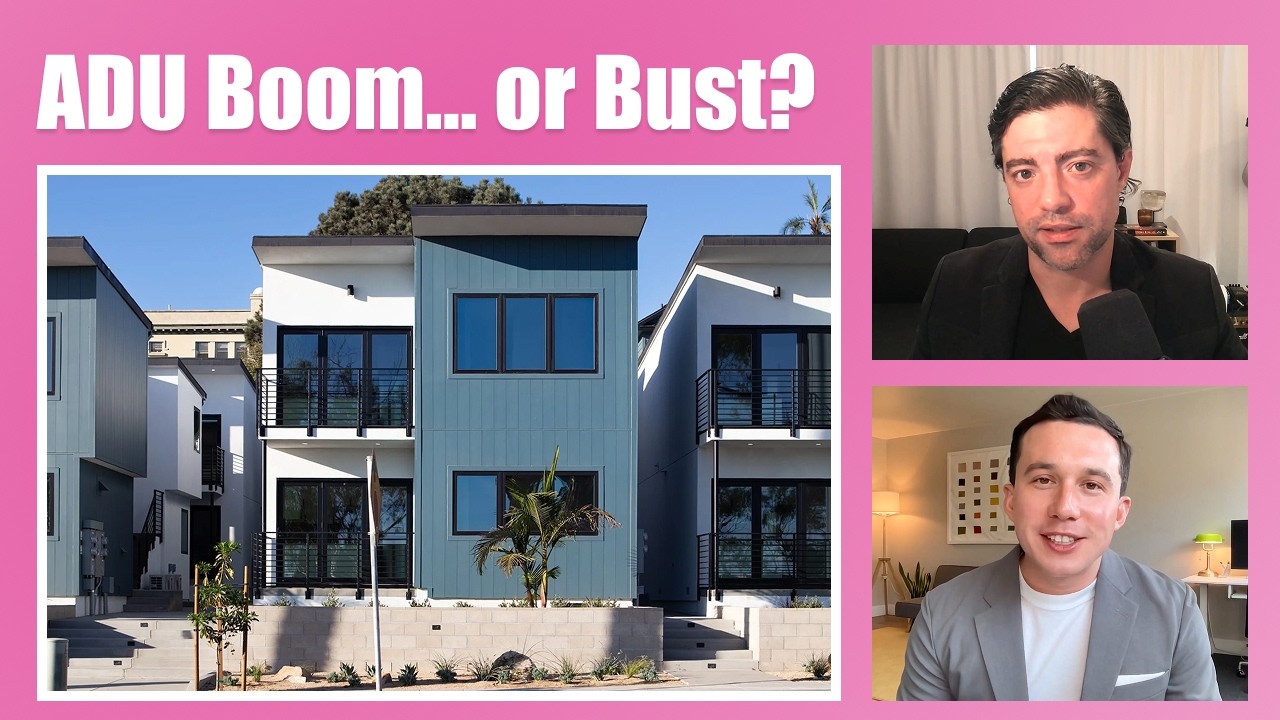
00:13BaileyGood morning. So this will be a important into the video podcast series here. We're gonna be talking about the latest changes to the ADU regulations in San Diego in 2025 here. And based on what we've been talking about, it seems these are some pretty major updates that people should be aware of.
Would you agree with that assessment?
00:32Sean CanningYeah, certainly if you're planning an ADU project, you really need to be aware of these because you're. Going to be designing your project for these new regulations. And if you have a project in process for an ADU or multiple ADUs, you really need to be submitting this project within the next six weeks to get locked into the current ADU regulations.
00:53BaileySo this is not a minor update to the code. This is a major update, so it's worth paying attention to.
00:59Sean CanningIt's pretty substantial. Look at this.
01:01BaileySo let's just get right into it then, starting with the big picture, what is actually changing in regards to San Diego's ADU regulations, and why should homeowners and developers care?
01:12Sean CanningOkay, so you could pretty much break this down into two categories here. You're gonna have some changes to the general ADU regulations, which is going to affect most homeowners as they're planning to build an ADU or two ADUs in their backyard. And then there's a second half of this, which is gonna affect mostly the developers.
the changes to the ADU bonus program generally, a homeowner is not going to use the ADU bonus program. That's gonna be more of a developer type thing. But homeowners are planning one rental unit, two rental units in their backyard, and both of these people are gonna be affected by this.
So the first thing I should mention is all the information that I'm gonna discuss in this podcast comes from the Report to Planning Commission right here. And this was issued on April 24th, 2025, and it was in front of the planning commission on May 1st. if everything ends up falling into place and becomes code, the deadline to submit your project would be.
July 1st, and the reason for that is because if you submit your project to July 1st, and then you go through the intake part of the permitting procedure, and then you get your first plan check invoice, and you pay that plan check invoice, you're grandfathered into the code that is in place.
when you pay that invoice. So these will probably hit the code around mid July. So if you submit your project by July 1st, that gives you about a two week buffer to get all the paperwork done and get the invoice paid. And there could be a little bit of a rush in that period. So that's why I would say give yourself at least two weeks grace period and shoot for a submittal around July 1st.
I want to cover one thing in particular, which I would say is the most significant change, and that is what's listed as item eight in this document. So in item eight, it states that. Multifamily zone lots. If there's a proposed multiple dwelling unit structure, you can build two ADUs.
03:02BaileyHowever, if there's an existing multiple dwelling unit structure, you can build eight ADUs. So if you're a logical person, I think the most relevant question here is what is a multiple dwelling unit structure Well, I would say it's likely a property that already has at least two separate units. So it could be a home and then an ADU detached.
03:22Sean CanningOkay, so that would be a pretty fair guess.
03:25BaileyBefore we dive into it though, I do want to clarify are these changes a hundred percent going into effect? I know you said there's a municipality meeting about a week from when we're recording this, so like what is the likelihood, of these changes actually going to effect.
03:38Sean CanningI would say we're probably gonna see about 95% of this in the code, and there's gonna be two meetings. and then the mayor has to sign off on this. So there's three milestones that occur before this gets signed into code.
03:51BaileyGot it. Okay.
03:51Sean Canningthe key thing here is what is. A multiple dwelling unit structure. So I actually asked the development services department, what is a multiple dwelling unit structure, and they directed me to the planning department and I asked the planning department and they said to ask the development services department, so nobody really knows what a multiple.
Dwelling unit structure is, I actually went to the state level and the state defines a multiple dwelling unit structure as two dwelling units within an existing structure. So ADUs would not count, and you could not have two detached units that would constitute as a multiple dwelling unit structure.
So that's the first thing you have to understand. And now I can show you how this is gonna have a major impact on ADU development in all of the RM zones.
So here's city of San Diego, and if you look at the brown and tan zones, these are the multiple dwelling unit, or this is the multifamily zoning basically.
So you can see we have some lines of, tan and brown over here, and then over here you have quite a lot of it. And then I'm just looking at everything south of for the purpose of this conversation, you have some over here. So. Before this update goes into place, anybody in these zones can build two ADUs by, right?
Each of those ADUs could be 1200 square feet if they have the FAR. Now, the reason this is gonna have a major implication is let's zoom in on some of these multi-family zones and look at what exactly they have here. So we'll take Harrison Ave.
I own a property on Harrison Ave. I know this is a multifamily zone.
05:28BaileyBefore you jump into it, can you just clarify what colors are being affected here on that map?
05:34BaileyOkay, so all of the brown and tan zoning here is the multifamily zoning where you can build more than one dwelling unit. I see.
05:44Sean CanningOkay, the orange and pink and red is commercial. The yellow is single family. The major effect based on these code changes is gonna be in the multifamily zoning.
So here I am, I'm in Southeast San Diego in Logan Heights, and I'm gonna zoom in just so I can give you an example of what the implication of this change, if it goes into code, is going to be Let's look at some of these properties here first. You can see this property has looks like two dwelling units on one lot.
If this is in fact one lot right here, you can kind of see where the lot line is. Now this lot has two existing single family homes, So the code would have pretty limited effect on a lot like this with two attached dwelling units.
But let's take a look at some of these other lots. Here we have two detached dwelling units, 20 54, 20 56. Now, according to the written language of this code. this does not constitute a multiple dwelling unit structure because these dwelling units are not attached. So based on this, rather than being able to build two ADUs, which we can build under the current code, you'd now only be limited to build one ADU.
So the new code is gonna be more restrictive in a lot of scenarios in the RM zone. Let's take a look at this one here. This is 2063 ocean View Boulevard. So it looks like there's one single family home here, but it's a multifamily zoned lot based on the current. Code. We could build two ADUs on this lot based on this written code.
We would have to develop the ADUs on this lot as if it was a single family zoning, so we could only build one ADU. Now, if you wanted to build two ADUs under the new code, what you would have to do is first build this structure into ADUplex, and then you would be permitted to build two ADUs here.
Now, the reason why this. Is so important is because there's so many fees that are gonna come with this process that are not listed in this document here. And I'm not sure if the people who have written this document are fully aware of the fees. So let me explain why this is gonna be a significant cost increase to somebody trying to build two ADUs on a lot like this.
07:53BaileyZoom in a bit more just so it's easier to see.
07:55Sean CanningOkay, so you see this one here, 2063. So let's say the homeowner had plans to build two ADUs right now. Today. They could build two detached ADUs. They could attach the ADUs to each other and build ADUplex, ADUplex structure of ADUs. But once this new code. Comes into place, they would have to build a new dwelling unit attached to this structure, which would then permit them to build two ADUs.
When you build this dwelling unit here, you're gonna be subject to impact fees. Number one, you're gonna be subject to the full sewer and water fee, which is $5,000 more than the sewer and water fee for the ADU. You're gonna be subject to fire sprinklers for this new dwelling unit, which means the two ADUs behind also need fire sprinklers.
And this dwelling unit is gonna require solar panels, which are basically not worth installing with SDGs current rates unless you also install a battery. So the cost implication here to build this dwelling unit is gonna be roughly $5,000 per impact fees. $5,000 for sewer and water fees, $30,000 for solar panels, and about $10,000 for the fire sprinklers for this structure.
So that's $50,000 more on this project if you permit this project under the new code, then under the previous code. this is just a major implication and Look how many of these properties would fall into that same category.
multiple dwelling unit structure. Same here. Here's a single family in a multifamily zone. This one would work because it looks like ADUplex structure, so any of these properties that are not attached duplexes like this one, but rather two separate units.
Would have to jump through major hoops and pay major fees just to get the same thing you can get right now for a fraction of the cost.
my question then for you is, can you just explain what exactly is prompting these changes from the city's perspective? so most of these changes are clarifications to the San Diego Municipal Code, We're not clear that it was aligned with the state code because the city has to at least adhere to the state code a minimum. So certain things like
here's one. Item number three states that ADUs do not need fire sprinklers if the existing dwelling unit does not have fire sprinklers. That is just a clarification. So now the city is gonna write that out explicitly in the municipal code to make sure. it's crystal clear because there's always confusion between the people plan checking our projects and the people like me designing the projects.
So now they're gonna put it in the code where it should be. So us as professionals can say, no, no, no. Turn to this page of the municipal code. It's crystal clear. This ADU does not require fire sprinklers. So some of these are clarifications and some of these are things. Where the state has stepped in and said, actually, your municipal code does not align with state regulations.
And one of those things would be item seven, where the city of San Diego said once you do two ADUs on a lot, you now need to add a certain amount of trees on that lot. which seemed, Pretty simple to comply with, but the state actually stepped in on that one and said, actually, the goal with these ADUs is to have a lower barrier to entry.
So we don't want all these excessive peripheral requirements like adding trees when you're trying to build an ADU. We just want people to be able to build the ADU at the lowest cost possible. So now specifically with this item number eight, which is the one I feel to be the most problematic. The planning department said we're putting this in to the municipal code to align with the state code.
But this is interesting because while they do need to align with the state code, if they were already going above and beyond the state code, there was no reason to align with the state code and the state did not step in for this one and ask them to realign this. So this is something that the city is driving.
And what the reason for this is, I'm not really sure. I just don't know if the city has looked into every scenario and how this will affect some of these areas, particularly multifamily zoning where there's not been a lot of development historically, so you don't have a lot of multifamily dwelling unit structures, even though the lot is a multifamily zone, lot.
12:07BaileyInteresting. So would you say that this is part of a larger trend, not just in San Diego, but perhaps California? Other cities in California and just the western portion of the US where ADUs do seem to be more popular, we'll say, than the Eastern portion. Are cities pulling back on the pro ADU momentum, do you think, because a couple years ago when these regulations were first introduced, it seemed like a huge step in the right direction, but now it seems like the NIMBYs are fighting back.
Well, I, especially the ADU bonus program is definitely a response to a NIMBY movement here in San Diego. It's hard for me to say if this is a statewide movement to. Pull things back because I am neck deep in City of San Diego, ADU regulations, so I know all the nuances to these and when something like this changes, I understand all the micro effects that this has.
12:59Sean Canningif you just look at City of San Diego item eight is a major step backward. And the ADU bonus program in general is probably a step backward, but it does have quite a lot of Practicality and reason behind the ADU bonus program, step back because there were people out here in San Diego that were abusing the ADU bonus program.
I guess my frustration. Comes from the people who are trying to do these smaller ADU projects. Sometimes they're referred to as like the, the missing middle housing where people are trying to add housing for middle class, which it would be these ADUs and how a homeowner trying to do their first project at the lowest cost is gonna be affected by these.
That's where a lot of my concern comes from.
13:41BaileyOkay. and I think you have a very balanced perspective if I do say so myself. I think you're pretty reasonable. All things considered but I know it's not all doom and gloom here. So what are some of the less talked about, perhaps, positive changes that are coming out of this code? For example, I know there's a new regulation about. Being able to build over 1200 square feet in uninhabitable spaces. So what are some wins that are coming out of this new code and who may be able to benefit from this?
14:09Sean CanningOkay, thanks for bringing that up. there are some really interesting quirks here and some ways that you can strategize your project to take advantage of those, which always is the goal. On any project, you need to have an angle. things are so expensive and permitting is so complicated here.
You have to have that angle on your project to make it worthwhile. the one you're mentioning is really interesting. I don't know how many properties actually have this scenario, but it could be interesting if you have this, and I know this one also works in the county of San Diego, where you may see more properties like this.
But item number one states that if you have. An existing dwelling unit, or if you have an inhabitable space, like a garage. Those are areas where the jurisdiction is, the county of San Diego, you can convert those structures into ADU and you're not limited to the 1200 or 800 square foot limitation that you're seeing at the city level or the state level.
So in theory, if you were to have like a big farm and maybe it's no longer being used As a farm. You could convert that into basically like an ADU mansion. And previously the thought would be you'd have to chop this up into multiple 1200 square foot units, but now the code is gonna be explicit.
One way this could be applied in the city of San Diego is if you have a giant home that you want to divide into ADUplex, well, half of that home could be an ADU, and half of it could be a dwelling unit, and you're no longer limited to 1200 square feet. So that's an interesting angle if you find yourself in that scenario.
But let me go over some of the other interesting situations here and then we can talk about how maybe they would benefit certain types of people in the city of San Diego. Item number five, I think may be the most interesting if you're interested in short term rentals. So a couple years back, the city of San Diego really put some significant regulations on.
Airbnbs and short-term rentals. Short-term rental being something that's rented for 30 days or less. I think the only situation where you're renting something for 30 days or less is some sort of vacation rental.
basically, if you're trying to rent something for under 30 days in the city of San Diego, there's four different tiers. some of which require a specific license from the city the higher up you go in the tier, like tier three and tier four are pretty restrictive. But tier two states something like if you're a homeowner, you could rent yourhome as a short-term rental.
And I think the amount of licenses they'll give for this is unlimited. So today I could apply. For a short term rental and rent out a bedroom in my home on Airbnb. And that would be a legal process. But what item number five states is that J ADUs have no minimal rental period.
So then you start to think, well, why would they say that? Why not just make rented over 31 days and then you eliminate any of the short term rental issues you were having when you put these regulations on Airbnbs? Well, I think this one comes from the state, but I think the implications that happen here in the city would be like if I was to build an addition on my home and designated as A-J-A-D-U.
The JADU is not a separate unit. Technically it's within the envelope. Of the single family home that you're building it in. So I suppose I could build A-J-A-D-U and then Airbnb, that whole JADU, and then I think we're just like right back to the short term. Rental situation we had before all these, Airbnb regulations came into place.
So I think finally, the JADU may have a purpose. Previously, there wasn't a lot of purpose to J ADUs, but now this adds some purpose to J adu if you want to try to generate income with this short-term rental plan.
17:47Baileymove on to the ADU bonus program, 'cause I know there's some significant changes there. So quickly, in about 30 seconds, can you just define what exactly the ADU bonus program is and then what exactly is changing?
18:02Sean Canningthe ADU bonus program, the most controversial part of the municipal code in the city of San Diego, highly debated for the last year and mostly debated. In the last two months. So the ADU bonus program is not required by state. It was something that the city of San Diego basically said, well, we'll take your ADU regulations from the state and we'll raise you the ADU bonus program.
single family zoning, you get one ADU, multi-family zoning. Used to get two ADUs just based on the zoning. After those ADUs, you could enter into the ADU bonus program. And what that basically states is that you can build another ADU if you make it affordable. And if you build the affordable ADU, then they're gonna allow you to build another ADU, which is you can rent market rate.
So it's non affordable. But then after that you can build another affordable one and you get another market rate one, and you can build another affordable one. You get another market rate and you can just continue to do that So the only limiting factor is gonna be your floor area ratio, your setbacks, and your height restriction,
you would have if you were to build a single family home, although the setbacks are a little bit more relaxed. So if you could build a 2000 square foot single family home, you could actually build a 2000 square foot ADU apartment complex using the ADU bonus program. Seems like a great idea in concepts In practice, what happened was you had a couple select projects, probably less than a dozen, probably less than half a dozen, who really abused the program.
And maybe the term abused is not correct because they are using the code legitimately, and we have to assume the code was written by people who are competent. So they probably plan for these types of things. But we had a couple projects where people would build 30 units in one apartment complex behind an existing single family home on a cul-de-sac with no parking.
And, and sometimes this occurred in single family zoning. So this is frustrating because if your home is in a single family zone lot, you would expect that your neighbors are all gonna have basically single family homes. But in some circumstances you get a 30 unit apartment complex.
So you could understand why this would be frustrating to people, right?
Yes, growing up in the suburbs and someone who still likes the peace and quiet in my later twenties, I understand why people might not like that. Yeah, imagine your neighbor in Ringwood built a 30 unit apartment complex,
20:21BaileyYeah. Well at the time I probably would've actually liked that, but not if I was like, you know, the typical 50-year-old homeowner for sure. But,
20:27Sean Canningright?
20:28BaileyBut moving forward, so I think we've covered the latest changes in a very succinct way. If people want more information. Actually, you recently did record a. in depth technical, one hour overview of these code changes, and then you also compared them to the initial ones in 2020 so people could see the evolution if they're interested in that. So we will plug that video here in the description, but. Let's pivot towards what people can actually do and how they should be thinking about these types of projects going forward. Let's start with your personal approach. how are you adjusting your design process and approach, and overall client strategy in regards to these changes.
21:09Sean CanningOkay, so the first thing that everybody should understand is the timeline here. If you're starting a new ADU project today, you have to be designing the new A-D-A-D-U project to these upcoming codes because by the time you finish design and engineering. And then get into permitting, you're gonna be subject to these codes.
So that's the first thing. We're planning ahead and we're tracking these code changes and the design projects that we're gonna start this month are gonna be designed according to these new changes. So I would say if you're looking to do an ADU project in a single family zoning. There's limited changes.
In fact, you may actually have more opportunity in single family zoning because item number. Six here states that if you're in a single family zoning and you have a single family dwelling unit, you can build a you can convert some of your existing home or a garage into an ADU, and you could still build a detached ADU.
So there's an opportunity to get three units in single family zoning. And that's getting clarified in this new change. So there could be actually more opportunity if you're in a single family zoning. So that's something I would consider if I was looking to build an ADU or two A in single family zoning.
If you're in a multi-family zoning lot, we really need to wait to see how this code is gonna fall into place. In the written language of the municipal code. But in general, if you have an existing single family home in a multifamily zone lot, I think what I would plan to do, you could either build ADU and build a 1200 square foot ADU and if your lot is smaller, that could be simple angle for you Make that single family home ADUplex and then build two more ADUs. So that's a good angle here. Now, if you already have ADUplex in a multifamily zone lot, it seems like they're gonna allow you to build now eight ADUs, which. is so interesting. 'cause at the same time, the code is allowing more development and also restricting development
So maybe the sweet spot here is you have a multifamily dwelling unit structure in a multifamily zone, and you have. Land behind it. And that seems to be the best opportunity that this new change would allow.
There's also some more setback regulations here, which could give more opportunity for people on corner lots. So previously ADUs were not allowed to encroach into the street side setback, when you're on a corner lot, you have a front yard setback, you have a street side setback.
So those areas were generally not allowed. You were not allowed to build ADUs there, but now the code is gonna allow you to build with a four foot street side setback. So corner lots now are going to increase in value for ADU development.
23:43BaileyOkay, we're now gonna pivot more towards more solutions as well, because you know, I think that's one of your mindsets is always that with the challenges come opportunities. So in that vein, do you think pre-approved plans are going to perhaps become more viable as a way to shortcut through some of these headaches?
Your firm offers the print house pre-approved plans based on one of the projects we've covered here. I will link that project in the description here, but I know that if people were to Google pre-approved plans, they could find them for their municipality.
So do you think ADU floor plans could become more viable in this scenario?
24:21Sean CanningWell, I would say if you want to sneak in a project before these code changes, the pre-approved plan is probably your only opportunity. So like if you were to hire me before the end of May, then we could probably get a permit submittal in using the pre-approved print design and you would be grandfathered into the current code.
People who would fall into that category would be if you're in an RM zoned lot and you do not have ADUplex structure on that lot. If we start your project this month and use the pre-approved design, we could turn it around very quickly, get grandfathered into the current building code, but there is also a major issue with all of the municipal.
Offered pre-approved plans. the Prince layout does not really suffer for this. Because of this, we've designed it to like universally fit all lot types, but within the city of San Diego, there's so many different lot sizes. There's like substandard lot sizes, which are really small. And then you have like your smaller lot size, which is only 25 feet wide by 125 or 140 feet deep.
A lot of the pre-approved. ADUs just are not gonna fit on that lot size, especially when you factor in that there's an existing home there, which is also gonna reduce your building footprint. where you're gonna plan the ADU. So while the municipalities are required to have these pre-approved options, they don't fit a lot of lots.
And unless you're looking to do like a one bedroom or a studio ADU, in which case you probably can fit it so they're just not as. Universal as the one that we designed. And actually, you know, it's interesting, this is a little bit of an aside here, but I'm actually working on two new predesigned units that would fit on 25 foot wide lots, and they would be two or three bedroom units.
26:06BaileyOkay, PE people will find out. we'll let them know once those are ready for
26:10Sean CanningMm-hmm.
So pivoting towards the conclusion here, what would you say are the top two to three takeaways homeowners should walk away with Okay, let's cover this from two different angles here, We'll start with the ADU bonus program. So while I think most of the changes are very reasonable, like there's added regulations, if you're in a high fire severity zone or a very high fire severity zone, they're gonna require fire sprinklers, which you'd probably end up with anyway if you're outside of the tpa, A zone.
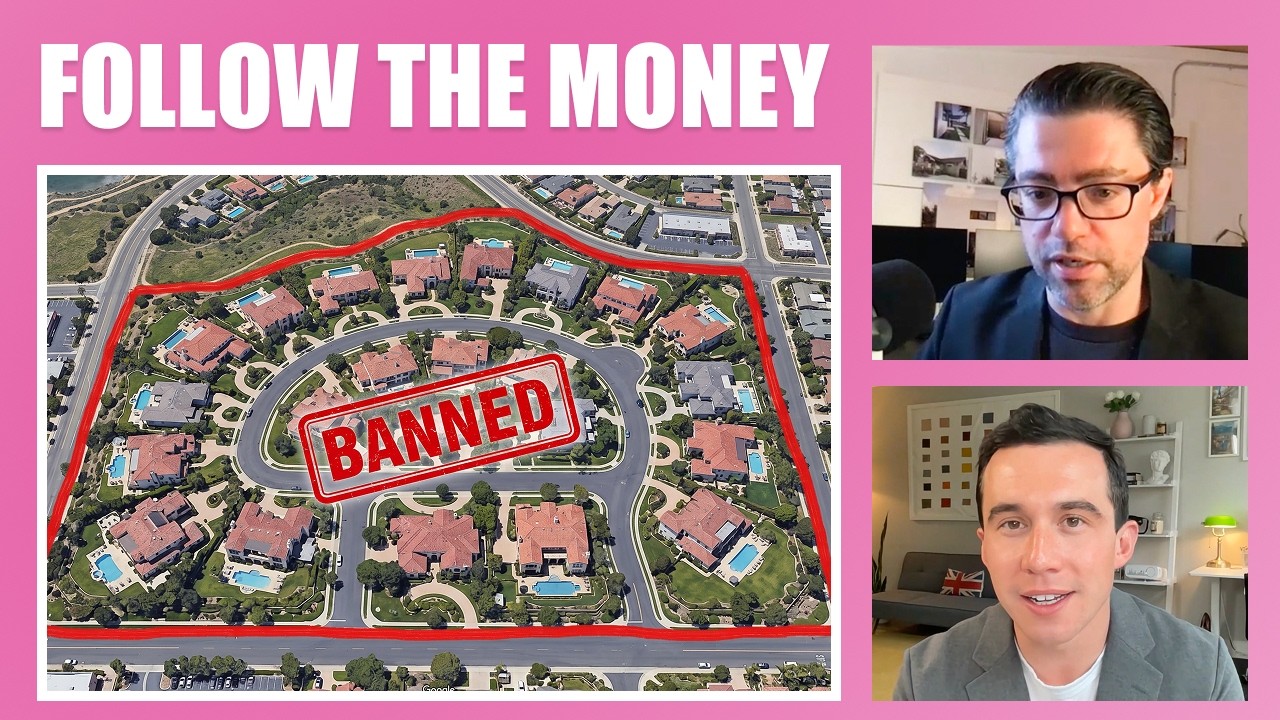
You're gonna be required to do parking and they're gonna ban the ADU bonus program from low density single family zoning. But you can still use the ADU bonus program in the most common single family zoning. And actually the statistics here lemme see real quick here. With the alteration to the single family zoning, 84% of the bonus ADU program occurred in the RS Zone, and that's still gonna be allowed. So really the ADU bonus program is barely gonna affect the A ADU bonus developments. But that's another story. So if you're a developer here, Bailey, let's say you want to invest in a project, you're gonna invest your hard earned cash into a project.
The first thing is you need to be fairly confident that your investment into the development is gonna be better than your investment into the stock market, because otherwise you would just invest in the stock market, right?
27:30BaileyIn this scenario, am I a property development firm or am I just an individual property developer?
27:36Sean CanningIt doesn't really matter, but let's just say you are a, let's say you're an individual,
27:41BaileyOkay.
27:41Sean CanningYou're considering using this ADU bonus program to make some money because that's the only reason you would really do it. So you need to make sure this is a better investment than any of the other available investments.
Of
So,
27:54BaileyI would say, yeah, so I mean average the s and p 500, I believe they say the past 60 or so years, it's gone up 8% every year on average.
28:03Sean Canningmm-hmm.
that's kinda like the benchmark you're looking at. You want to hit over 8% on return. I mean, one can say with the macroeconomic situation at the moment that. Maybe it won't be doing that going forward, at least maybe in the next, you know, five to 10 years we could say. So I guess it would depend on someone's outlook on the global stock market, but I'm not well qualified enough to talk about this, and we're not giving financial advice here to be clear, Yeah. but basically, if, let's say the city of San Diego creates an incredibly high fee, a hundred thousand dollars per unit. In any multifamily development project, all of a sudden you as an investor would be like, well, maybe I don't wanna invest in multifamily apartments because I'm gonna pay so many fees that it's just gonna drop my profit.
And we're not even discussing the risk on these projects. So it would disincentivize you to do that project and you'd take your money elsewhere.
28:56BaileyI agree with that, especially when you contrast it with the fact that, you know, if you just put your money in the stock market, you don't need to do anything necessarily versus, managing this entire project and seeing it through to completion. The one thing is, and I'm sure there's a ton of advanced spreadsheet analysis that these companies are doing when they're considering these projects, but even with these increased fees, if you still just think that is gonna continue to go higher.
Property values are gonna continue to climb. Then maybe 10 to 15 years from now, you would still look back at this period and say, this was an absolutely fine time to invest.
29:26Sean CanningWell, okay, so then let's look at it from the other angle. So what drives the developer to do these types of programs? And that is an incentive by the city to do the program. And that's what the ADU bonus program is at the, at the heart of it, it's an incentive where the city is saying, we're gonna give you these extra units.
So the ADU bonus program is an incentive to encourage developers to build these projects.
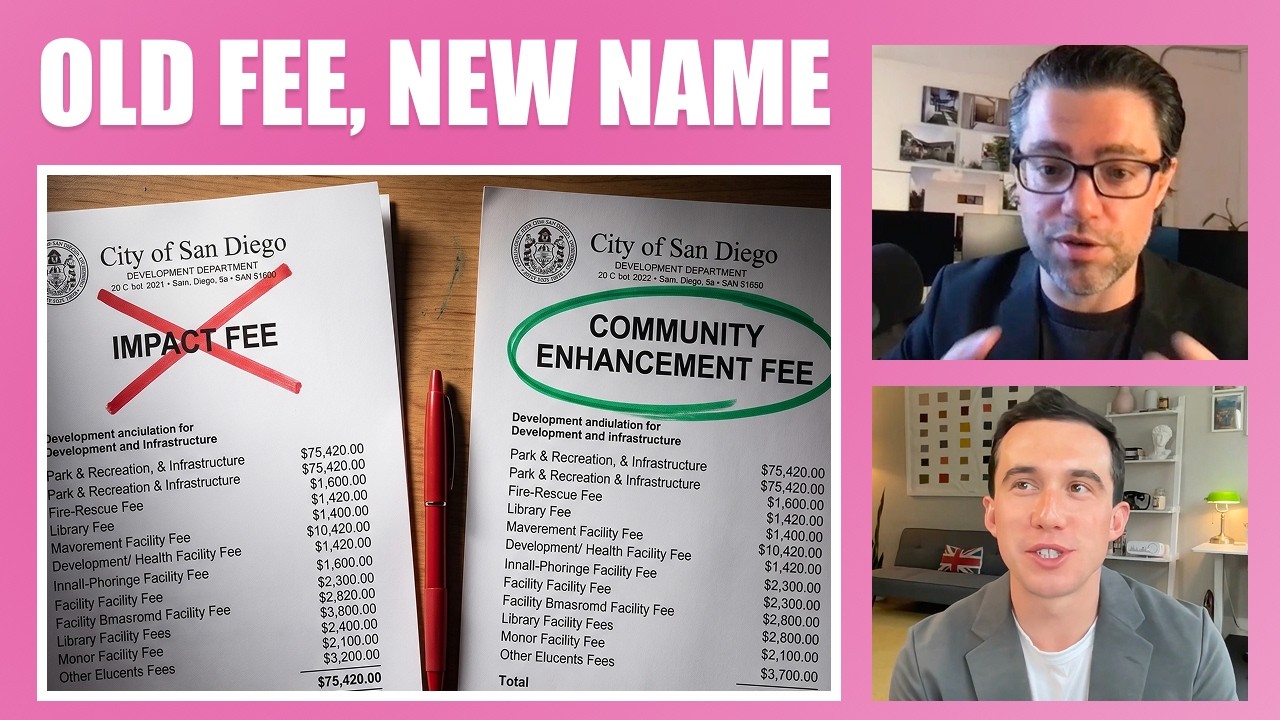
That's like undeniable. That's what it is. But at the same time, while the city is saying, Hey, here's an incentive. That we want you to do these projects. The new change with the ADU bonus program is they're gonna say, and now we're gonna add more fees per unit to these projects. So the city is saying two things at the same time.
They're saying, Hey, we want you to build these, which is an incentive, but they're also saying, Hey, we're gonna add fees here, which is a disincentive. So why It's like almost like a two-faced thing that that's going on. So to just to conclude the ADU bonus program, I would say. The changes are reasonable, although I don't agree with the additional fees because the first thing a city does if they want more housing, is they reduce the administrative fees.
It's the first thing you would do, and here they are adding fees back. So I think that one change coming down the pipe with the ADU bonus program, I do not agree with all the other changes are reasonable. But here the city of San Diego, again is saying, here's a cool incentive, but you're gonna pay more.
So they cancel each other out.
30:51BaileyYeah. And it sounds like to me, based on what you were describing there, that it's going to disproportionately hurt middle class people who are trying to, increase the equity of their property by building these ADU developments while still the property development. Corporations, and I mean, I don't know if hedge funds are involved, but I know hedge funds have been getting much more involved with the housing market, buying up housing supply.
So it seems like the regulations are whether purposeful or not hurting regular people while helping or at least not hurting as much the bigger, the bigger players in the market, which I think is not great.
31:25Sean CanningI think it kind of hurts both people, to be honest, because the purpose of the ADU bonus program is to get more people into housing. Let's get more housing stock, which should drop the cost of housing throughout the city. It should allow people in your generation to get into housing. But now the developer is gonna pay more money to build these houses.
So I think it hurts the developer and I think it hurts the little guy. And then that's a good segue to how the other ADU regulations are gonna affect the small time homeowner, the person who's not a developer, but the person who's trying to build that. Granny flat in their backyard. That's, where they're gonna put their aging parents or where they're gonna put their kids who can't break into the housing market.
So, in general, let's skim through these 14 I. Items and let's see how they're gonna affect. So item number one, increasing the ADU size has basically no effect here. Item number two, ADUs can be built in agricultural zones, very minor effects. Item number three just clarifies fire sprinklers are not required.
The dwelling units is gonna have fire sprinklers. It's just a clarification. So we already had that. Item number four creates more restriction on ADUs and coastal zones. No, it's not really gonna help too much. Item number five is the one we discussed with the J ADUs minimum rental period. That's more for probably maybe an investor or a house hacker or somebody in short term rental, so that could have some effects.
Item number six is the one that probably helps this, the little guy the most, where it basically says you can get three to four units on a single family's zone lot. So there's a lot of people who own single family zone lots that want to build a unit for their parents, wanna build a unit for their kids, or maybe want to build two units and create some rental income.
I guess the way I can see that is you build the duplex in the front, you rent out the duplex, and then you build the ADU in the back. And then you live in the ADU in the back. So you get the brand new 1200 square foot home and you got a rental property in the front that generates income.
Item number eight, with the multifamily, the multifamily zone, lots, that's gonna have a pretty significant effect. I would say negatively on the small, small time developer. Item number nine A And not included in FAR. That's an interesting one.
That actually does the exact opposite thing that the. ADU bonus program is supposed to do. So while these new ADU bonus programssupposed to throttle down the size of these bonus program projects item number nine here, which states that ADUs do not have to be included in floor area ratio actually allows for larger developments and single family zone lots and multifamily zone lots.
So that's an interesting juxtaposition. Item number 10 reduces the street side yard setback to four feet. That's a good one. Item number five increases the setbacks to five feet for high fire severity zones and very high fire severity zones. 12. Just has to do with parking. That's not gonna have any impact.
Very little impact. Item number 23 here. This is the last one I. For the general ADU regulations, this one probably has the most significant impact throughout the city of San Diego. And while it's pretty nuanced here, and I don't even understand all of this, but item number 23 allows for a provision for ADUs to be sold separately for the dwelling unit.
I think this one has the biggest impact for probably the smaller scale developer, the medium scale or larger scale developer. And also the homeowner or potential homeowner like yourself. So if you can build, let's just say four units. One is a dwelling unit and maybe three is ADUs, and then you can sell the ADUs individually, those ADUs will hit the market at a lower rate, a dwelling unit.
And I think that's a net win. I think that accomplishes all of the major goals of ADUs. It adds more housing, reduces costs, and provides the lower level on the ladder of the housing market. So item 23, allowing ADUs to be sold separately with lots of hoops you have to jump through.
It's not like you can do this for any ADU but when that process becomes a little bit more clear, that one could actually have the greatest impact overall.
35:20BaileyYeah, that one jumped out at me as well when he sent me the list ahead of time. The only thing is, I don't know if you're on a tight lot and you have like, you know, multiple people coming and going. Doesn't sound like maybe the best living situation day to day, but I mean, you get what you pay for. So comes with the territory, I would say. Now to wrap up here, how can. Your Studio 10 70 architecture help people with ADU projects going forward because there's multiple ways you could help people based on what types of projects they're interested in and what their investment level is.
35:53Sean Canningthe first thing I'll say is if you're trying to design an ADU project, especially if it's more than one ADU, you really have to know these codes, like word for word, because they're constantly changing. There's nuance here between the lines. That you would only know if you've been doing this for years because
The way the planning department is going to interpret and plan check projects is slightly different. So you really need somebody who's just on top of this. They're no longer really projects where a homeowner can draft up their own plans, and we're crossing over the fringe of where a standard drafter could be doing these projects unless they're intimately involved in these changes to the regulations.
In fact, we get a bunch of projects where a drafter has started the project and for one reason or another, they're not able to get the project. Past the finish line of permitting because they just missed a couple things. we get projects where I get calls from people who are saying, Hey, the building department wants me to like replace my entire driveway.
They want me to repave the entire street across from my house and they want me to excavate. Demolish, excavate and replace the entire sidewalk, and it's gonna cost me $50,000. And I'm just trying to build an ADU here. What do I do? And you gotta know the sections of the codes because if you zig where you should have zagged in City of San Diego, all of a sudden there's a $25,000 fee or more in front of you.
So we can help you if you're looking to do a single ADU, if it's a a custom ADU, that'd be a perfect project for us. We can help you if you're looking to do multiple ADUs for rental purposes. We can help with multi-generational living. Set you up on a lot you already own with a situation where everybody on the lot has privacy, but you can all live there, which is probably your lowest cost of living in your own home in city of San Diego.
And if you want to take a look at the pre-designed ADU we offer, that's also a good angle to reduce the design and engineering fees and get into an ADU at the lowest cost possible.
37:50BaileyOkay. And then outside of official project engagements, there's also two new ways you can help people. So why don't you talk about that as well, and then we'll wrap up.
37:59Sean CanningYeah, so for the people who have been calling us with permitting issues, even if it's not our project, we've rolled out a service where we can actually help you get to that next step of permitting. We'll advise you which direction to go. MaybeModify your design slightly, maybe if you reference a certain code section, then your project would be able to be pushed through permitting.
if you're stuck in permitting, if you need somebody to permit your project, we now have a permit consultation service that's available on the website. If you have a project designed and you're not sure how it's gonna relate to these new changes, you need me to take a look at it. We also have an architectural consulting service where it's an hourly service where I can just take a look at somebody else's design and just give you some general guidance.
So those are. Two ways that we can help people that just need a little extra help rather than the entire design process.
38:48BaileyAll right, so this was a very in depth episode, but I think this is probably, quite honestly, the best resource. People can find ahead of time for these new code changes. So hopefully people got a lot of value out of it. They can, leave a comment if they have any questions here in the video and I'm sure you'll get back to them when you have a chance. And then otherwise, all the links and resources we mentioned are going to be in the description of this video for people to, learn more about that. Sean, is there anything else you wanna wrap up with before we call it for this one?
39:17Sean CanningNo, I think we covered mostly everything. we'll have to provide some links to The other videos I'm making about these changes because some of them go really deep in depth and they'll explain really the nuances that we can't cover in 45 minutes.
39:32BaileyThanks for watching everyone. Make sure to like the video subscribe and we will see you in the next one.